
Acne is a common skin problem that causes pimples, blackheads, or whiteheads. It happens when tiny holes in the skin (called pores) get clogged with oil and dead skin.
To treat acne, healthcare providers prescribe medicines that are put on the skin, such as benzoyl peroxide (to help kill the germs and lessen swelling), retinoids like adapalene or tretinoin (to help pores from getting clogged), or combination products (may include both benzoyl peroxide and a retinoid or an antibiotic). These medicines can cause skin redness, dryness, and irritation, but these reactions usually get better as your skin gets used to the medicine. Healthcare providers may also prescribe medicine taken by mouth.
It usually takes 2–3 months to see results, so it's important to be patient and keep using the medicine even if your skin doesn't improve right away.

General information
Putting on acne medicine:
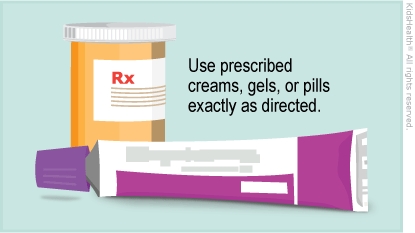
If your healthcare provider prescribed more than one medicine, follow their instructions for which one to use in the morning and which one to use at night and in what order to apply them.
To help with redness, dryness, and irritation:


Why do blocked pores lead to acne? When pores are blocked, germs can grow inside the pore and make the skin red, swollen, or sore. Acne often shows up on the face, chest, back, or shoulders.
How long will I need to use the medicines? Most people start to see their acne getting better after using the medicine for 2–3 months. Then you will need to stay on the medicine for at least a few more months to make sure your acne doesn't come back. Once your acne has been under control for a while, your healthcare provider may recommend trying to cut back or stop the medicines.
Should I use special kinds of skin products? If you use cleanser, moisturizer, sunscreen, or makeup on your face, read the product labels. Look for products that say they are:

