
Pectus carinatum (pek-tus kar-ih-NAY-tum) is a condition where the breastbone (sternum) and ribs push outward, causing the chest to stick out more than usual. It is sometimes called "pigeon chest." Pectus carinatum usually becomes more noticeable during periods of rapid growth, such as puberty.
Many children with pectus carinatum do not have any symptoms. Some may have chest discomfort, shortness of breath during exercise, or concerns about their appearance.
Some kids with pectus carinatum don’t need treatment. If treatment is needed, it may include wearing a chest brace, or less often, surgery. Your healthcare team will help you decide what treatment, if any, is best for your child.
With the right care, most children with pectus carinatum can lead active, healthy lives.
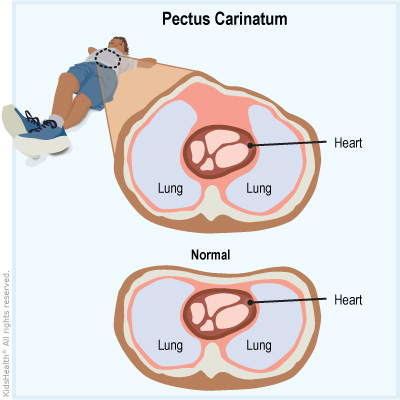

Follow your healthcare provider’s instructions for:

Your child:

Your child has severe chest pain or trouble breathing.

What causes pectus carinatum? Medical experts don't know exactly what causes pectus carinatum. It can run in families. Kids with curvature of the spine (scoliosis) or certain genetic disorders are more likely to have it.
Will the pectus carinatum get better on its own? Pectus carinatum doesn’t get better without treatment. It tends to get worse when kids have growth spurts. But when they've finished growing, the chest wall usually doesn’t change much more.
Will my child need treatment? Treatment depends on your child's age, how severe the chest wall change is, and whether it causes symptoms or emotional distress. Many children are treated successfully with a chest brace. Rarely, surgery is needed.
How does a chest brace work? A chest brace applies gentle pressure to the breastbone and chest wall over time. It works best while a child is still growing. Following the recommended brace schedule is important for success.

