
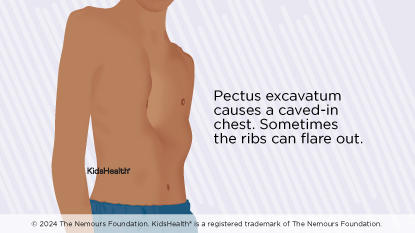
Pectus excavatum is a condition where the ribs and breastbone (sternum) grow inward, creating a sunken or “caved-in” appearance of the chest. It is sometimes called “funnel chest.” Pectus excavatum can range from mild to severe. When it’s severe, it can lead to problems with the heart and lungs.
Many children with pectus excavatum do not have any symptoms. Some may have chest discomfort, shortness of breath during exercise, or concerns about their appearance.
Some kids with pectus excavatum don’t need treatment. If treatment is needed, it may include a vacuum bell (a device that is placed on the chest that pulls the chest forward) or surgery. Your healthcare team will help you decide what treatment, if any, is best for your child.
With the right care, most children with pectus excavatum can lead active, healthy lives.

Follow your healthcare provider’s instructions for:

Your child:
You and your child have concerns about the way their chest looks.

Your child has severe chest pain or trouble breathing.

What causes pectus excavatum? Medical experts don't know exactly what causes pectus excavatum. It can run in families. Kids with curvature of the spine (scoliosis) or certain genetic disorders are more likely to have it.
Will the pectus excavatum get better on its own? Pectus excavatum doesn’t get better without treatment. It tends to get worse when kids have growth spurts. But when they've finished growing, the chest wall usually doesn’t change much more.
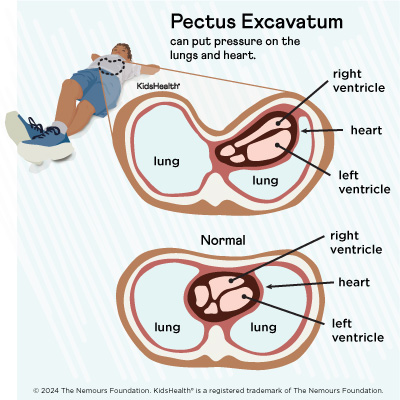
What problems can pectus excavatum cause? Many kids with pectus excavatum don’t have any problems. If the breastbone is pressing on the heart and lungs it can lead to chest pain or an irregular heartbeat. It can also make a child get more tired or out of breath than expected.
How will my healthcare team decide what treatment is best for my child? The healthcare team will consider if your child is bothered by how their chest looks and if your child has symptoms to help you decide on the right treatment.

