Lactose intolerance is a condition in which your body cannot fully digest lactose, the natural sugar found in milk and dairy products. This happens when the intestines (bowels) don't make enough lactase, the enzyme (special protein) that helps digest (break down) lactose. When undigested lactose passes through the intestines, it can cause belly pain, bloating, cramps, gas, diarrhea, or vomiting.
Limiting how much lactose is in the diet helps most people with lactose intolerance. Different people can tolerate different amounts, so you will need to help your child find out how much lactose is OK for them.

Foods and Drinks That Commonly Contain Lactose
- Milk (cow, goat, sheep)
- Cheese (especially soft cheeses, like ricotta, cottage, and cream cheese)
- Ice cream and frozen yogurt
- Sour cream and cream
- Butter
- Yogurt
- Processed foods containing whey, curds, milk solids or powder, casein or caseinates, or dry milk powder
Tips for Daily Living
- Find your child's tolerance level. Have them eat small amounts of dairy and gradually increase them to learn when symptoms happen. It may be helpful to keep a record on paper or on your phone of what your child eats and what symptoms they have.
- Give your child lactase enzyme supplements at the beginning of a lactose-containing meal as directed by your healthcare provider.
- Try yogurt with live cultures, which are easier to digest because the bacteria they contain help break down lactose.
- Try hard, aged cheeses (cheddar, Swiss, Parmesan), which are naturally very low in lactose.
- Combine dairy with other foods. Eating dairy as part of a meal (rather than on an empty stomach) can slow digestion and reduce symptoms.
- Choose lactose-free alternatives. These provide the same nutrients without causing symptoms.
- Read labels carefully. Lactose may be in many processed foods and medicines.
- Space out dairy intake. Smaller amounts spread throughout the day are often better tolerated than one large serving.
Getting Enough Nutrients
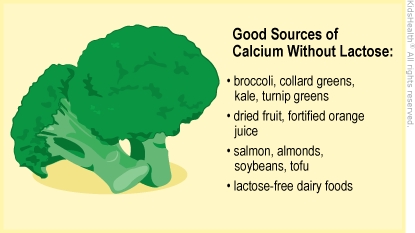
Your child needs calcium and vitamin D for healthy growth. Dairy foods are good sources of these nutrients, but your child can get them from other foods too.
- Good sources of calcium include:
- Fortified plant-based milks and juices
- Fortified cereals
- Canned salmon and sardines with bones
- Tofu made with calcium
- Collard greens, kale, and bok choy
- Broccoli
- Almonds and almond butter
- Lactose-free dairy products
- Good sources of vitamin D include:
- Salmon, tuna, and mackerel
- Fortified milks, plant milks, and cereals
- Egg yolks
- Lactose-free dairy foods
- A few minutes of sunlight on the skin (the body makes vitamin D when exposed to sunlight)
Ask your provider whether your child needs a calcium or vitamin D supplement.

What causes lactose intolerance? Causes include:
- A normal tendency for some people to make less lactase as they get older
- A health condition that affects the intestines, such as celiac disease (a condition in which eating gluten causes the body to attack its own digestive system), or an infection
- Taking an antibiotic (medicine), which can temporarily affect how the intestines make lactase
- An inherited (genetic) condition where the body makes little or no lactase
Will my child always be lactose intolerant? For most people, lactose intolerance lasts throughout life. Some kids develop lactose intolerance for a short period after being sick with diarrhea or taking an antibiotic. This type of lactose intolerance goes away as the intestines heal.
How do healthcare providers test for lactose intolerance? Healthcare providers first ask questions about a child's symptoms and diet. Sometimes they can check for lactose intolerance by testing the breath for hydrogen levels before and after a child drinks lactose.
Is lactose intolerance a milk allergy? Lactose intolerance is not the same as a milk allergy. A milk allergy involves the immune system and can be life-threatening; lactose intolerance involves digestion and is not dangerous, though it can be very uncomfortable.