Your child has an allergy to cow's milk. If your child eats or drinks cow's milk or something with cow's milk in it, they may have a mild reaction and just have hives (red, itchy bumps) or a severe allergic reaction, called anaphylaxis.
Anaphylaxis can cause trouble breathing and other life-threatening symptoms. It is treated with a medicine called epinephrine.
Here's how to care for your child.

Medicines:
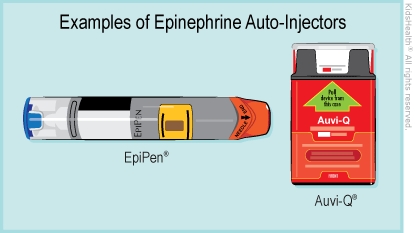
- Know what to do if your child has signs of an allergic reaction and how to use epinephrine if their symptoms are severe. Epinephrine is available to use as an injection (EpiPen ® or Auvi-Q®) or as a nasal spray (neffy®). Talk to your healthcare provider about which one is right for your child .
- Ask your healthcare provider for a written allergy action plan that includes when to use the epinephrine.
- Make sure your child always has epinephrine with them, including at school, childcare, and activities. Make sure the epinephrine has not expired, and don't leave it in cars or in other places where it could be exposed to too much heat, cold, or sunlight.
- Ask your healthcare provider what other medicines your child needs to keep with them (such as an antihistamine like Benadryl® (or a store brand) or an asthma inhaler).
Read food labels carefully before you give any foods or drinks to your child:
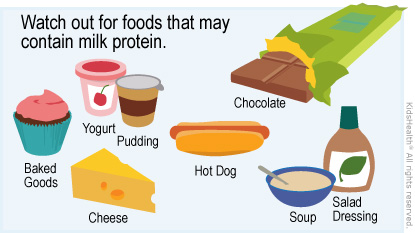
- Avoid all products with “milk” on the label or ingredient list. Your child should avoid every type of animal milk (such as sheep's milk and goat's milk) because they're similar to cow's milk and may also cause a reaction.
- Avoid foods and drinks labeled “may contain milk,” “processed in a facility that also processes milk,” or “manufactured on equipment also used for milk.” Not all companies use these labels, so if you're not sure, call or email the company.
- Ask your healthcare provider if your child can eat baked products that contain cow's milk.

Your child has one of these signs of a mild allergic reaction:
- Hives
- Skin itching, redness, or swelling
- Sneezing
- A stuffy or runny nose
- Itchy, watery eyes
- Coughing
If your child has more than one of these mild signs, or a mild sign is getting worse, give epinephrine right away then call 911 (see below).

Your child has any signs of anaphylaxis (a severe allergic reaction), such as:
- More than one mild sign
- A mild sign that is getting worse
- Swelling of the mouth or tongue
- Trouble swallowing
- Trouble speaking or hoarseness
- Throat tightness, wheezing, or trouble breathing
- Belly pain, nausea (sick to the stomach), vomiting (throwing up), or diarrhea
- Dizziness or fainting
- A feeling like something bad is about to happen
Follow these steps:
- Have someone call 911 while you give the epinephrine. If you're alone, give epinephrine first, then immediately call 911.
- Lay your child down with their legs raised while you wait for the ambulance. Give epinephrine again if their symptoms don't go away, get worse, or go away and then come back. If your child stops breathing or doesn't have a pulse, start CPR (cardiopulmonary resuscitation).
Your child needs to go to the ER after getting epinephrine, even if they're feeling better. The symptoms can come back and get worse.

What causes cow's milk allergy? The body's immune system works to protect the body from germs and other harmful substances. When someone with an allergy comes into contact with what they are allergic to, their immune system mistakenly thinks it's harmful and fights against it. This causes the symptoms of an allergic reaction .
Will my child always be allergic to milk? Many children outgrow a cow's milk allergy. Your healthcare provider can do tests to see if it's likely your child will outgrow their allergy and to check if your child still has it.
If my child gets only mild symptoms from cow's milk, can they still get more serious symptoms? Yes, even a child who has had a mild reaction in the past can have anaphylaxis in the future. It's very important to always be ready to treat anaphylaxis with epinephrine.
Are there treatments for cow's milk allergy? There are some treatments that can help the immune system react less to cow's milk. Talk to your healthcare provider to see if these treatments are right for your child.