
Triglycerides (try-GLIS-er-ides) are a type of fat in the blood. The body uses triglycerides for energy. Having high triglycerides as a child or teen could lead to a heart attack or stroke in adulthood.
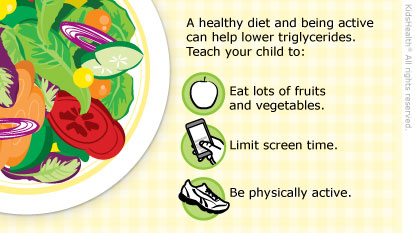
Making changes in your child's diet, helping them lose weight (if recommended), and making sure they get plenty of physical activity can help bring triglycerides back to a normal level and help improve overall health. Sometimes medicine is needed too.
Here's how to care for your child.


Your child is having trouble following the recommended diet and activity changes.

Your child:
These symptoms can be signs of inflammation of the pancreas (pancreatitis), which can happen with very high triglyceride levels.

What causes high triglyceride levels? In most kids, it's caused by eating too many calories, carrying extra weight, and not getting enough physical activity every day. Sometimes there can be a genetic (inherited) cause.
What are the symptoms of high triglycerides? Most kids with high triglycerides don't have any symptoms. The high triglyceride level is found on a blood test.
Why is having high triglycerides a problem? Kids with high triglycerides tend to have other conditions that increase the risk of heart attack and stroke in adulthood. For example, they are often overweight, have abnormal cholesterol levels, and may have diabetes. Losing weight, making diet changes, and increasing physical activity helps with all of these conditions. Making these changes early in childhood or the teen years is the best way to bring down the risk of heart attack and stroke.
Very high triglycerides can also cause problems in the liver and pancreas.

