
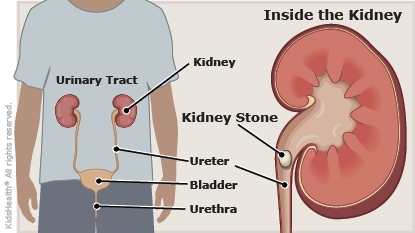
Kidney stones are hard, pebble-like objects that form in the kidneys. They form when minerals (like salts or calcium) build up in the urine (pee). The minerals collect together and become a kidney stone. Kidney stones can get stuck in the kidney, or they can travel out of the kidney into the ureter (the tube that connects the kidney to the bladder).
Larger stones cause problems such as back, side, or belly pain and blood in the urine (pee). Some stones also can block the flow of pee. Pain medicine and drinking plenty of liquids will help your child pass the stone out of the body in their pee. Your health care provider will have you strain the pee to see if the stone comes out. Here's how to care for your child.

Follow your health care provider's instructions for:
To strain your child's pee:
Collect any stones or stone fragments and let them dry on a paper towel. Once they are dry, put them in a clean container and take it to your health care provider's office.

Your child:

Your child:

Why do kids get kidney stones? Most kids who get kidney stones have a health condition or take a medicine that increases their chances of getting them. Some other reasons that can make a child more likely to get a kidney stone are:
Can kidney stones be prevented? It's not always possible to prevent some types of kidney stones. However, kids who've had kidney stones should:
If these changes don't prevent kidney stones, medicines can help for some kinds of stones.
Why do health care providers have you strain the pee? Your health care provider will test any stones or stone fragments to see what they are made of. They can use this information to find the cause and know what you can do to prevent other stones.
Are there any other ways to help stones pass or to remove them? If the kidney stone is large or does not pass on its own, your child may need to see a urologist or surgeon to help remove it.

