
A fever is a higher-than-normal body temperature. Fever of unknown origin is diagnosed when a child has a fever for longer than a week and testing doesn't find the cause.
At this time, a specific cause for your child's fever wasn't found. Your child's healthcare provider will continue to work with you to find out what is causing your child's fever.
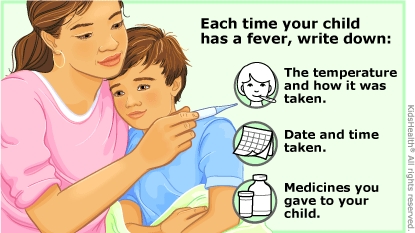
It's important to know how to check your child's temperature and what to do if your child gets any new or worsening symptoms.

| Type of Measurement | Where to Take the Temperature | When is the temperature a fever? |
| Rectal | Bottom | 100.4°F (38.0°C) or greater |
| Oral | Mouth (under the tongue) | 100°F (37.8°C) or greater |
| Axillary | Armpit | 99°F (37.2°C) or greater |
| Temporal Artery | Forehead | 100.4°F (38.0°C) or greater |
| Tympanic | Ear | 100.4°F (38.0°C) or greater |

Your child:

Your child:
You know your child best. If they have symptoms that worry you or seem very sick, call your healthcare provider or take your child to the ER.

What causes fever of unknown origin? In kids, viruses or bacteria (types of germs) usually cause fever of unknown origin. Less often, it can be a sign of inflammation (pain and swelling) in the body or a reaction to a medicine.
If my child feels warm, is it always fever? Not all kids who feel warm have a fever, so it's best to take their temperature if you have any concerns. Kids can feel warm when they are very active, play outdoors in hot weather, sleep in warm pajamas under blankets, or are upset and crying. These things make the skin feel hot because the skin is doing its job of getting rid of heat in the body.
Do all fevers need treatment? No. If your child has a fever but seems well, is alert, is drinking, and is acting normally, there's no need to give medicine to lower the fever. If your child seems cranky, tired, and uncomfortable, lowering the fever with medicine (such as acetaminophen or ibuprofen) can help your child feel better.

