
A child with bowlegs has knees that curve outward. It's most noticeable when the child is standing — the knees are apart and the ankles are together. Bowlegs usually straighten out on their own by the time a child is around 4 years old. Here's how to care for your child.
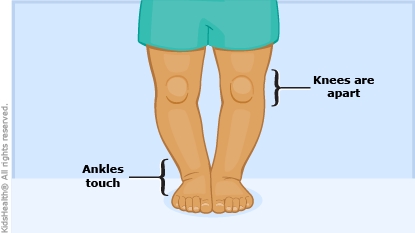


Your child has:

What causes bowlegs? Most babies are born with bowlegs. When they are growing in the womb, some of the baby's bones have to rotate (twist) slightly to fit into the small space. As a child starts walking, the bowing might increase slightly, then get better. Children who start walking at a younger age have more noticeable bowing.
What can be done for bowlegs? Bowlegs don't usually need treatment since children's legs normally straighten out on their own by about age 4. Your healthcare provider may need to repeat previous exams to make sure your child's legs are getting better as they grow. Some kids need to see an orthopedic healthcare provider if the legs don't straighten on their own.
If bowlegs are painful or don't improve as the child grows, healthcare providers might suggest doing surgery to straighten the legs.
Can bowlegs be a sign of something more serious? Most of the time, bowlegs are not a sign of a more serious condition and go away on their own. Sometimes, bowlegs are caused by bone growth disorders, such as rickets or Blount disease.

