
Tongue-tie happens when the frenulum (a band of tissue that connects the underside of the tongue to the floor of the mouth) keeps the tongue from moving freely. Often tongue-tie doesn't cause any problems and doesn't need treatment. But in some babies, it can cause feeding issues and may lead to problems with speaking later on.
Your child had a procedure called a frenotomy to release the frenulum. This will make eating easier for your baby and will help prevent speech problems in the future. Here's how to care for your baby at home.
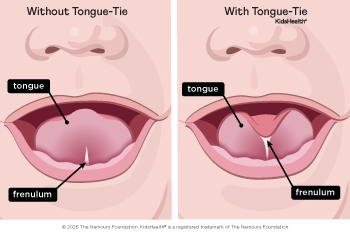

Follow your healthcare provider's instructions for:

Your baby:

Your child isn't drinking at all or has signs of dehydration (not enough water in the body) such as a dry or sticky mouth, sunken eyes, less pee or darker pee than usual, little or no tears when crying, or unusual sleepiness.

What causes tongue-tie? The exact cause isn't known. It happens before a baby is born. Tongue-tie sometimes runs in families and is more common in boys than girls.
What are the symptoms of tongue-tie? Usually, tongue-tie doesn't cause symptoms. When it does, the signs look different depending on the child's age.

