Rocky Mountain Spotted Fever (RMSF) is an infection caused by bacteria (a type of germ) spread through a tick bite. Kids with RMSF usually have a rash. Other symptoms may include fever, chills, muscle or joint aches, vomiting (throwing up), red eyes, headache, swollen hands or feet, belly pain, and nausea. If the infection is not treated, it can get worse and cause serious problems in the brain, heart, lungs, nerves, and other parts of the body.
While in the hospital, your child was monitored closely and an antibiotic (medicine that fights bacterial infections) was given to treat their RMSF. The antibiotic may have first been given intravenously (through an IV) and then by mouth. It is now safe for your child to go home and finish the antibiotic there. Most children begin to feel better within 48–72 hours after starting the antibiotic.
Here’s how to care for your child at home and prevent tick bites in the future.

Follow your healthcare provider's instructions for:
- Giving the antibiotic (Don't stop giving the antibiotic early, even if your child seems better — they need to finish all doses to be sure the infection is fully treated.)
- When to follow up
Help your child feel comfortable:
- Make sure your child gets plenty of rest.
- Encourage your child to drink water, juice, or other liquids throughout the day to prevent dehydration (not enough water in the body). Signs of dehydration include a dry or sticky mouth, sunken eyes, less pee or darker pee than usual, little or no tears when crying, or unusual sleepiness.
- If your child is uncomfortable from pain or fever, and your healthcare provider says it's OK, you can give acetaminophen (Tylenol® or a store brand) or ibuprofen (Advil®, Motrin®, or a store brand). Follow the directions on the label for how much to give and how often. Don't give ibuprofen to babies under 6 months old.
- Don't give aspirin to your child. It can cause a rare but serious illness called Reye syndrome.

Your child:
- Isn't drinking at all or has signs of dehydration
- Has chest pain or severe belly pain
- Has yellow eyes, a new rash, or bruises
- Has signs that the infection may be affecting their brain, such as trouble speaking, walking, eye pain, changes in vision, tingling or numbness (loss of feeling) in the hands or feet, confusion, a bad headache, a stiff neck, or a seizure (uncontrolled jerking movements)
- Has trouble breathing or starts breathing very fast
You know your child best. If they have symptoms that worry you or seem very sick, call your healthcare provider, take your child to the ER, or call 911.

Can my child go to school or daycare? Your child can return to school or daycare once they have no fever for 24 hours without fever-reducing medicine and feel well enough to participate in regular activities.
Is Rocky Mountain Spotted Fever contagious? No. RMSF can't spread person-to-person. Your child got it from a tick bite, and others can't catch it from your child.
How long will the rash last? The rash usually starts to fade within a few days after a person starts the antibiotic. It may take 1–2 weeks to completely go away. Typically, the rash doesn't itch or hurt.
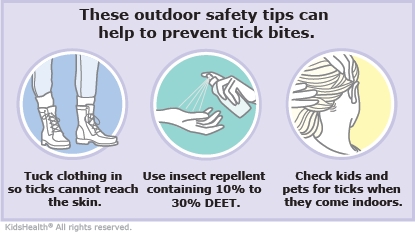
How can we prevent future tick bites? It will help to:
- Check your child and pets for ticks after they spend time outdoors, especially in wooded or grassy areas.
- Teach your child not to sit on the ground in wooded areas.
- Use insect repellent containing 10%–30% DEET when your child plays outside.
- Have your child wear closed shoes, long-sleeved shirts, and pants when in wooded or grassy areas. Tuck the shirt into their pants and the pant legs into their socks to keep ticks out.
- Have your child wear light-colored clothing so you can see ticks more easily.
- Remove ticks right away if you find them — use fine-tipped tweezers to grasp the tick close to the skin and pull straight up.
- If you have a pet, follow your veterinarian's advice about products that can keep your pet tick-free.