At first, babies need only breast milk or formula to grow and thrive. At around 4–6 months, most babies are ready to start eating solids too. Babies who are ready to start solids:
- Can sit up
- Can control their head and neck
- Seem interested in food
- Can lean back or turn the head when full
- No longer have the tongue-thrusting reflex in which they push their tongue out when anything is placed between their lips
Here are some tips for starting your baby on solid foods.

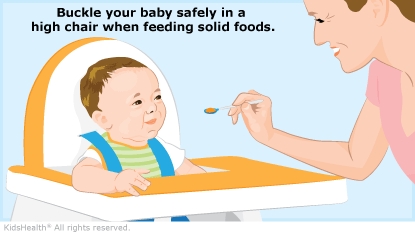
Buckle your baby safely in an infant seat or high chair when feeding solid foods.
To feed your baby:
- Give your baby a small amount of just one kind of food at a time. You can start with any soft food, such as iron-fortified, single-grain infant cereals (mixed with water, breast milk, or formula until thinned out) or pureed meats. Cereals and pureed meats are good sources of iron and zinc, which your baby needs.
- Place the spoon near your baby's lips and let your baby smell and taste. If your baby won't eat the food, wait a minute and try again, or try at the next meal.
- Don't force your baby to eat or finish a food.
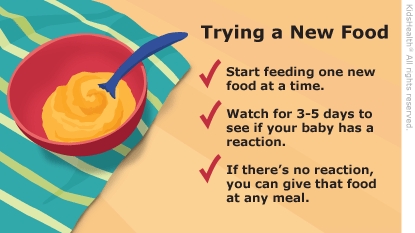
- When your baby seems comfortable with the first food, you can continue to add new foods, such as pureed fruits, vegetables, beans, lentils, seafood, or yogurt. Wait a few days between each new food in case your baby has an allergic reaction.
- Continue adding thicker foods (such as mashed potatoes) as your baby is ready. You can try other foods, such as a small amount of peanut butter mixed into fruit puree or yogurt, or soft scrambled eggs.
- Once your baby can bring their fingers to their mouth, you can give them soft "finger foods" that you cut up into small pieces (such as bananas or well-cooked vegetables or pasta).
Tips for healthy feeding:
- Continue giving your baby breast milk or iron-fortified formula after starting solid foods. Babies continue to get most of their nutrition from breast milk or formula through their first year. Cow's milk and milk substitutes (like almond or soy milk) don't have the nutrition that babies need.
- Don't add salt or sugar to your baby's food.
- Don't give fruit juice to your baby. It can lead to future tooth decay, too much weight gain, or diarrhea.
- Don't add cereal to your baby's bottle unless your healthcare provider tells you to.
- Ask your healthcare provider if your baby needs any vitamin supplements.
Safety tips:
- Don't give your baby honey in the first year. It can lead to botulism, which is an infection that causes muscle weakness and trouble feeding and breathing.
- Don't give your baby hard or round foods, such as grapes, nuts, raw carrots, raisins, popcorn, hot dogs, or round candy. These can cause choking.
- Store baby food that you make and opened baby food jars in the refrigerator. Throw away after 2 days.
- To prevent germs from your baby's mouth from growing in any leftover food:
- Put the amount of baby food you think your baby will eat into a bowl.
- Feed your baby.
- Throw away any food left over in the bowl.

Your baby has signs of a serious allergic reaction, such as:
- vomiting again and again
- wheezing
- trouble breathing
- swelling of the lips, face, or tongue

Will feeding foods such as fish, peanut butter, and scrambled eggs make my baby more likely to develop a food allergy? No, giving these foods doesn't make it more likely. In fact, waiting too long to give your baby these foods might actually make them more likely to develop food allergies. Even babies with family members who have food allergies can try these foods when they start solids. However, if your baby has severe eczema (patches of dry, red, itchy skin) or already has other food allergies, you should talk to your healthcare provider before introducing these foods.
Can I make my own baby food? You can make your own baby food at home by pureeing foods with a food processor or blender. Here are some things to keep in mind:
- Wash your hands well before handling food.
- Preserve the nutrients in your baby's food by steaming or baking instead of boiling.
- Freeze foods that you aren't going to use right away rather than canning them.