Iron-Deficiency Anemia: How to Care for Your Child

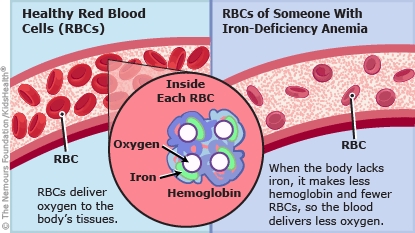
Iron-deficiency anemia happens when the body lacks the iron to make enough healthy red blood cells.

It can occur in people who have a problem absorbing (taking in) iron from food, from blood loss (for example, from heavy menstrual bleeding), or from not getting enough iron in the diet. Kids with the condition may be pale, feel tired, or have other symptoms.

Treatment with iron supplements (taken by mouth) usually makes the anemia better. Sometimes other treatments are needed.

Care Instructions

Iron supplements:

  • Give your child the exact amount of the iron liquid or pill as prescribed by your healthcare provider.
  • Liquid iron can stain teeth, so brush your child's teeth after they take the medicine.
  • You may notice your child's poop is darker than usual. This is from the iron and is harmless.
  • Continue giving the iron (usually for at least three months) until your healthcare provider says you can stop, even if your child feels better.
  • To help iron get absorbed into the body:
    • Avoid giving your child iron with antacids, milk, or tea because these interfere with the body's ability to absorb iron.
    • Serve fruits and vegetables high in vitamin C (such as orange or grapefruit juice, kiwi, melon, green leafy vegetables, and potatoes).
    • Have your child take iron before eating (unless this causes an upset stomach).
  • Keep all iron supplements out of children's reach and in childproof containers. Taking too much iron is poisonous and is a medical emergency.

Diet:

  • Include iron-rich foods in the family's diet, such as:
    • Iron-fortified cereals (you can even stir these into other foods, like mashed potatoes and pancake batter)
    • Lean meat, poultry, and fish
    • Tofu
    • Egg yolks
    • Beans
    • Raisins and dried apricots
    • Green leafy vegetables like spinach and kale
  • Talk to a dietitian (nutrition specialist) or your healthcare provider if you need extra help getting more iron into your child's diet or if your child is a vegetarian. They can recommend foods to help your child get enough iron.
  • For babies and young children:
    • Babies younger than 1 year should drink only breast milk or an infant formula containing iron. Starting cow's milk before age 1 can cause iron deficiency or make it worse.
    • Kids 1-5 years old should not drink more than 24 ounces of cow's milk a day, Too much milk can make kids feel full and lower the amount of iron-rich foods they eat.
    • Babies who get more than half their nutrition from breast milk should start an iron supplement when they're 4–6 months old. They should get the supplement until they are eating iron-fortified solid foods (such as infant cereal) twice a day.

Other instructions:

  • Depending on the cause of your child's iron deficiency anemia, your healthcare provider may recommend that you:
    • Take your child to a gynecologist to help with heavy periods
    • Go to a medical specialist (such as a gastroenterologist, a doctor that specializes in problems with the digestive system) for more information on your child's anemia
    • Have your child get an iron infusion through an IV (intravenously, or through a vein)
  • Don't give babies under 1 year any juice unless your healthcare provider tells you to. It doesn't give them the nutrition they need. Limit juice to under 4 ounces in 1- to 3-year-olds, 4–6 ounces in 4- to 7-year-olds, and 8 ounces in kids over age 7.
  • Follow up as instructed by your healthcare provider to make sure your child's anemia is getting better.

Your child:

  • Is pale or more tired than other kids their age
  • Isn't taking the iron supplements
  • Gets an upset stomach, diarrhea, or constipation after taking iron

Go to the ER if...

Your child or someone else at home takes more iron than is recommended by your healthcare provider.

More to Know

Why is it important to treat iron-deficiency anemia? It's very important because over time, the condition can slow a child's growth, weaken their immune system, and cause lasting problems with learning, attention, and energy.

What happens in iron-deficiency anemia? Without enough iron, the body can't make hemoglobin (the part of red blood cells that lets them carry oxygen). As a result, less oxygen gets to the brain, muscles, and organs, and the body doesn't get what it needs to grow, learn, and stay healthy and active.

What causes iron-deficiency anemia? Causes include:

  • Not enough iron in the diet
  • Rapid growth
  • Too much cow's milk in young children
  • Blood loss
  • Poor absorption of iron through the gut from certain medical conditions (like celiac disease, in which gluten damages the lining of the gut)

What are the symptoms of iron-deficiency anemia? Children may not have any symptoms at first. When symptoms do happen, a child might look pale, be tired, seem moody, have developmental delays and behavioral and attention problems, feel dizzy, or want to eat ice or nonfood items (such as paint chips, chalk, or dirt).

Learn More