
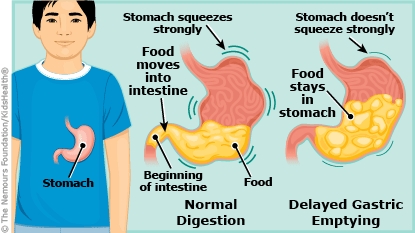
Delayed gastric emptying is a condition in which food stays in the stomach longer than it should. It can make someone feel full after eating only a little bit of food, lose weight, or experience bloating, nausea, or vomiting.
Delayed gastric emptying may get better on its own. Here are some ways to help your child feel better.

Follow your healthcare provider's recommendations for:
Have your child:
For older kids and teens, drinking alcohol, smoking cigarettes, and using marijuana can all make delayed gastric emptying worse and should be avoided.

Your child:

Your child has:

What causes delayed gastric emptying? Delayed gastric emptying can happen on its own, after an infection (such as gastroenteritis, in which someone has vomiting and diarrhea), or as a side effect of certain medications. It also happens in people who have diabetes (a disease that affects how the body uses a sugar called glucose) or other medical conditions.
How long does it usually take for delayed gastric emptying to get better? If the delayed gastric emptying is from an infection, it usually goes away a few weeks after the infection is gone. If it's caused by a medicine, your healthcare provider may recommend that your child stop the medicine, lower the dose, or change to another medicine. For people with diabetes, delayed gastric emptying can be a long-lasting condition, but keeping glucose levels in control can help.

