
The tonsils are lumps of tissue on both sides of the back of the throat that are part of the body's germ-fighting (immune) system. When kids get tonsillitis, the tonsils get swollen and irritated. Tonsillitis is usually caused by an infection from a virus or bacteria (types of germs).
Children with tonsillitis have throat pain. The pain may make it hard to swallow, talk, eat, and drink. It's important to make sure your child drinks plenty of liquids to prevent dehydration (not enough water in the body).
Healthcare providers treat tonsillitis caused by bacteria with antibiotics. Antibiotics have no effect on viruses, so they are not prescribed for tonsillitis caused by viruses.
Here's how to keep your child comfortable and make sure they get enough liquids while they heal.
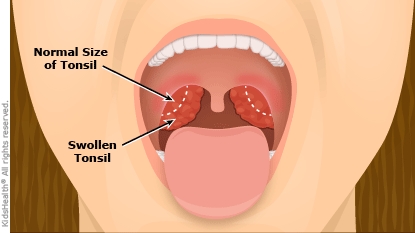


Your child:

Your child:
You know your child best. If they have symptoms that worry you or seem very sick, call your healthcare provider or take them to the ER.

What are the symptoms of tonsillitis? Common symptoms include a sore throat, fever, swollen glands in the neck, and pain when swallowing. Some kids with tonsillitis will have other symptoms, such as a runny or stuffy nose or a cough.
How do healthcare providers know if tonsillitis is caused by a virus or bacteria? If it's not clear whether tonsillitis is caused by a virus or bacteria, healthcare providers can do a throat culture to check for different types of bacteria, such as strep. To do a throat culture, the healthcare provider rubs a cotton swab (like a long Q-tip®) on the tonsils and back of the throat. The swab is then used for one or both of the following:
Can tonsillitis be prevented? Getting tonsillitis once doesn't protect someone from getting it again. To help prevent the spread, kids (and adults) should:

