Cellulitis: How to Care for Your Child

Cellulitis (sel-yuh-LY-tus) is an infection of the skin and the area just under it. It often happens when bacteria (a type of germ) enters the skin through a cut, scrape, animal or insect bite, or another break in the skin. The area usually becomes red or darker in color, swollen, warm, and painful. Once inside, the bacteria can spread quickly through the skin tissue and even through the body, which is why prompt treatment and regular follow-up are important.

Cellulitis is treated with antibiotics. Your child stayed in the hospital to get IV (intravenous or through a vein) antibiotics. They are now ready to go home. You will need to give your child an oral antibiotic (medicine taken by mouth) at home as directed by your healthcare provider.

Here's how to care for your child.
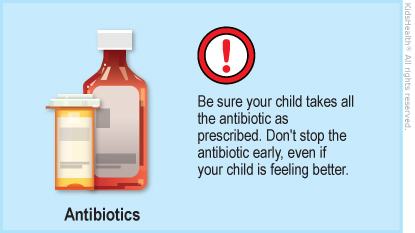
Illustration of medicine/antibiotics with English instructions

Care Instructions

  • Be sure your child takes all of the antibiotic as prescribed by your healthcare provider. Don't stop the medicine early, even if your child seems better. They need to finish all of the doses so the infection is fully treated and doesn't return.
  • Gently wash the infected area with clean water twice a day. Do not use hydrogen peroxide or alcohol — these can slow healing. Pat dry and cover with a clean bandage if your provider directed you to do so. Always wash your hands well with soap and water before and after touching the area.
  • Check the infected area daily for any signs that the cellulitis is getting worse, such as:
    • A growing area of redness or darkening color (your healthcare provider may want you to trace the outline of redness with a pen to make it easier to see changes)
    • Red streaks on the skin near the cellulitis
    • Increased pain or swelling
    • Fluid or pus (greenish or yellowish discharge) is oozing from the infected area
  • If your child has pain or is uncomfortable from fever, and your healthcare provider says it's OK, you can give acetaminophen (Tylenol® or a store brand) or ibuprofen (Advil®, Motrin®, or a store brand). Follow the directions on the label for how much to give and how often. Don't give ibuprofen to babies under 6 months old.
  • Don't give aspirin to your child. It can cause a rare but serious illness called Reye syndrome.
  • If the cellulitis is on an arm or a leg, help your child prop the limb up on pillows to reduce pain and swelling.
  • Make a follow-up appointment with your healthcare provider as directed to make sure the infection is getting better.
  • Ask your healthcare provider when it's OK for your child to return to school, daycare, and their usual activities. This is usually after they have been on antibiotics for at least 24 hours, haven't had a fever (without fever-reducing medicines) for at least 24 hours, and feel well enough to participate. If your child has fluid or pus oozing from the area, they will need to cover it with a bandage.

Your child:

  • Doesn't continue to improve at home
  • Has a new or higher fever or fever lasting more than 24 hours after starting the antibiotic
  • Has new or increased oozing of fluid or pus from the area
  • Has trouble taking the antibiotic as prescribed

Go to the ER if...

Your child:

  • Has red streaks spreading from the infected area or the red, infected area is getting bigger or darkening in color
  • Has skin around the infection that is beginning to look tight or pale due to severe swelling
  • Seems sicker and complains of increasing pain

You know your child best. If they have symptoms that worry you or seem very sick, call your healthcare provider or take your child to the ER.

More to Know

Can cellulitis spread to other people? If there is no fluid or pus oozing from the area, it's unlikely for cellulitis to spread to other people. If there is drainage, the germs can spread if someone else touches the drainage. If your child has fluid or pus oozing from the area, cover the area with gauze or a bandage to help prevent the spread of germs.

Can cellulitis be prevented? Keeping cuts and scrapes clean can help prevent cellulitis. Wash the injured area well with soap and water, apply an antibiotic ointment, and cover with gauze or a bandage. Try to prevent your child from touching or scratching cuts, scrapes, or insect bites.

What problems can happen from cellulitis? Without the right treatment, cellulitis can spread through the body. It can infect the blood — a serious condition called bacteremia or sepsis. This is why it is important to start antibiotics right away, have your child finish all of the doses, and watch your child carefully for any new or worsening symptoms.

Learn More
