
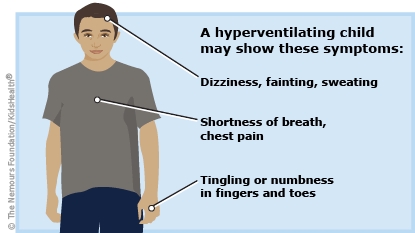
Hyperventilation means breathing too fast or too deeply. A hyperventilating child may be short of breath, sweat a lot, faint, have chest pain, have twitching, tingling, or numbness in the fingers or toes, or feel anxious.
Hyperventilation is very common. It can be scary for children, but it is not harmful. By learning ways to relax and control their breathing, kids can help prevent future episodes. In some cases, the healthcare provider may prescribe medicine to shorten or prevent it .
Here's how to care for your child.


Your child:

Your child:

What is hyperventilation? In an episode of hyperventilation, a person breathes too fast or too deeply for what the body needs. This upsets the body's balance of oxygen and carbon dioxide.
Normally, our lungs breathe at just the right speed to keep a good balance of oxygen and carbon dioxide in our bodies. For example, when we exercise, we need more oxygen and make more carbon dioxide, so we breathe faster.
What causes hyperventilation? Healthcare providers aren't sure what causes episodes of hyperventilation, but they may be triggered by physical and emotional stress, fever, anxiety, or panic. If you notice a pattern of hyperventilation, talk to your healthcare provider about how to reduce triggers and prevent episodes.

