
Your child had gastroenteritis (also called the "stomach flu"), an infection that causes vomiting (throwing up) and diarrhea (loose or watery poop). Your child stayed in the hospital for treatment and testing. The healthcare team gave them fluids (either by mouth or through an intravenous, or IV line) to replace the losses from vomiting and diarrhea. They also checked your child for different causes of gastroenteritis.
Your child is no longer vomiting, has less diarrhea, and is drinking well. No serious cause of gastroenteritis was found. You can now care for your child at home.
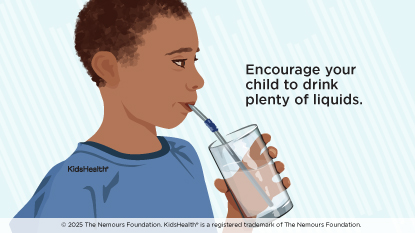


Your child:

Your child:
You know your child best. If your child has symptoms that worry you or seems very sick, call your healthcare provider or take your child to the ER.

What causes gastroenteritis? Gastroenteritis happens when a germ (virus, bacterium, or parasite) infects the stomach or intestines. Viruses are the most common cause of gastroenteritis in kids.
How do oral electrolyte solutions help keep a child hydrated? These solutions contain a balanced mix of water, electrolytes (sodium, chloride, and potassium), and sugars (glucose). They replace the liquids and electrolytes that a child loses through diarrhea or vomiting. The solutions help prevent or treat dehydration and keep the body's electrolytes balanced.
Does my child need an antibiotic? Since viruses are the usual cause of gastroenteritis in kids, an antibiotic won't help your child. Antibiotics treat infections caused by bacteria, not viruses.
How can we prevent gastroenteritis from spreading? To help prevent the spread of gastroenteritis:

