
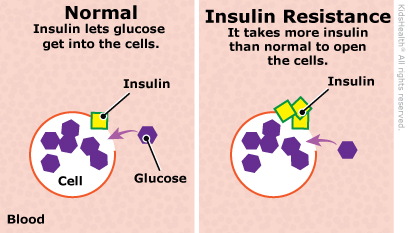
Hormones are chemical messengers that carry instructions to different parts of the body, telling them what to do and when. Insulin is a hormone that normally works like a key to "open" cells so glucose (sugar) can enter them. When someone has insulin resistance, they make enough insulin, but the cells don't respond normally to it (the "lock" is stuck). Glucose can't get into the cells and builds up in the blood (called hyperglycemia).
If insulin resistance continues, it can lead to type 2 diabetes. In type 2 diabetes, someone has long-lasting high glucose levels. Without treatment, type 2 diabetes can lead to serious medical problems.
Insulin resistance usually happens in someone who carries extra weight.
Weight loss, regular exercise, and healthy eating can all help improve insulin resistance, prevent type 2 diabetes, and improve overall health.


Your child has symptoms of hyperglycemia such as:

Who gets insulin resistance? Healthcare providers diagnose insulin resistance most often in kids who carry extra weight. Less commonly, it can happen in children who have genetic (inherited) conditions that can affect hormone levels, or in kids who take some types of medicines.
Will my child with insulin resistance get diabetes? In people with insulin resistance, the pancreas (an organ behind the stomach that makes hormones) tries to keep the glucose level normal by making more insulin. At first, the pancreas can keep up and the glucose levels may be normal. If the insulin resistance continues, the body may not be able to make enough extra insulin and the glucose may remain high. Over time, this can lead to type 2 diabetes.
What health problems are related to insulin resistance? Children with insulin resistance can develop other health problems, including type 2 diabetes, high blood pressure, high triglycerides (fats), and low HDL ("good") cholesterol. Females can also develop polycystic ovary syndrome (PCOS), which can cause excess hair growth, irregular periods, and fertility problems. Many kids with insulin resistance have a skin condition called acanthosis nigricans, which can make the skin in the folds of the neck, underarms, elbows, and knees darker and thickened.

