
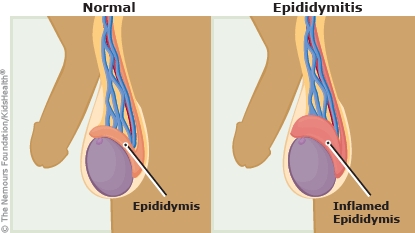
Epididymitis (ep-uh-did-ih-MYE-tiss) happens when the epididymis (ep-uh-DID-ih-miss) gets swollen and inflamed. The epididymis is the coiled tube at the back of each testicle. The testicles are where sperm (male reproductive cells) are stored.
Epididymitis can be caused by an infection (including sexually transmitted diseases, or STDs), injury, or problems with the bladder or other parts of the urinary system.
Most kids recover fully from epididymitis and don't have any lasting problems.

Follow your healthcare provider's instructions for:
For discomfort your child can:


Your child has sharp, severe, sudden, or worsening pain in the scrotal area.

What are the symptoms of epididymitis? Epididymitis usually causes pain and swelling of the testicle. Other symptoms can include pain when peeing or discharge from the urethra (the opening in the penis where pee comes out). The pain usually improves within a few days of starting treatment, but the swelling can take up to six weeks to go away completely.
What causes epididymitis? Epididymitis can be caused by an infection (including sexually transmitted diseases or STDs), injury, medical procedures, or problems with the way the urinary system formed in the womb.

