
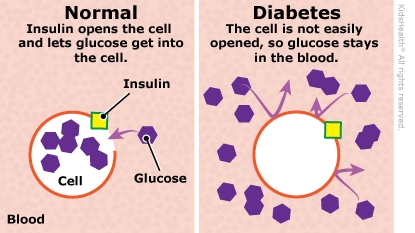
Type 2 diabetes affects how the body turns sugar (glucose) from food into energy. Normally, insulin — a hormone (chemical messenger) — helps glucose enter cells. In people with type 2 diabetes, the body still makes insulin, but the cells don't respond to it properly (this is called insulin resistance). As a result, glucose can't get into the cells and instead builds up in the blood. This causes hyperglycemia, or high blood sugar levels.
Treatment usually includes healthy eating habits, regular physical activity, checking blood sugar levels, and sometimes medicine or insulin. With the right care, kids with type 2 diabetes can live healthy, active lives.

Follow your healthcare provider's instructions for:
For healthy eating:
For healthy habits:


Your child:

Your child:
You know your child best. If they have symptoms that worry you or seem very sick, call your healthcare provider or take your child to the ER.

How is insulin resistance related to type 2 diabetes? Insulin resistance happens when the body still makes insulin but can't use it properly. As a result, glucose can't get into the cells and instead builds up in the blood.
To bring blood sugar levels back to normal, the pancreas — the organ behind the stomach that makes hormones — pumps out extra insulin. At first, this works. Blood sugar levels may stay normal even though insulin resistance is developing.
But if insulin resistance continues, the pancreas can't keep up. It can no longer make enough extra insulin to overcome the resistance, and blood sugar level stays high. Over time, this can lead to type 2 diabetes.
What causes type 2 diabetes? It isn't caused by any one thing. It usually results from a mix of factors including:
What problems can happen from type 2 diabetes? Having high blood sugar levels can damage blood vessels and nerves and cause problems in the heart, kidneys, and eyes.
How can I help my child eat a better diet and become more active? Try to make changes together as a family. This helps your child feel supported instead of singled out. Plan healthy dinners and cook together. Take a walk after dinner, visit the playground, ride bikes, or play active games outside. Making healthy eating and regular physical activity part of your family routine is one of the best ways to keep the whole family healthy.

