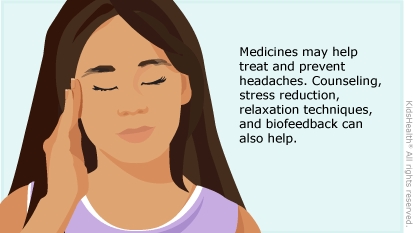
A headache is pain felt somewhere in the head. Headaches in children and teens aren't usually a sign of a serious issue. A child with chronic daily headaches has headaches that happen 15 days or more per month for at least 3 months.
Here's how to care for your child.

Follow your healthcare provider's instructions for:
- Giving any medicines as recommended. Don't give your child the medicines more often than directed as this can cause more headaches.
- Whether your child needs to see any specialists.
- When to follow up.
Care for your child when they have a headache:
- Give any medicines as recommended by your healthcare provider. This may include acetaminophen (such as Tylenol® or a store brand) or ibuprofen (Advil®, Motrin®, or a store brand).
- Don't give your child aspirin. It can cause Reye syndrome, a rare but serious illness.
- Make sure they drink plenty of water.
- If your child is able, have them go to school and do their regular activities. If they need to go to the school nurse and lie down or take a break from an activity for a few minutes, that's OK. Alert their teacher or any caregivers that this might happen.
- If their headache is severe, have them lie down in a quiet, dark room with a cool cloth on the forehead. Encourage your child to sleep.
Help your child identify what triggers their headache. Have your child keep a headache diary that includes:
- When the headaches happen
- How long they last
- What made the headache go away
- What might have triggered the headache

What causes headaches? Headaches in kids and teens usually are caused by:
- Infections (for example, from a virus)
- Too little sleep or sudden changes in sleep patterns
- Not drinking enough liquids
- Hunger
- Stress and tension in the muscles
- Allergies
- Medicines
- Changes in hormone levels (in females)
- Having a head injury
- Strong smells, such as perfume, smoke, fumes, or a new car or carpet
- Caffeine
- Some foods, such as alcohol, cheese, nuts, pizza, chocolate, ice cream, fatty or fried food, lunch meats and hot dogs, yogurt, aspartame, and MSG
Can headaches be prevented? To help prevent headaches, encourage your child to:
- Avoid any known triggers, if possible.
- Get plenty of sleep and stick to a regular sleep schedule.
- Eat healthy meals and snacks daily.
- Drink plenty of liquids, especially when doing physical activity or in hot weather.
- Find ways to lower stress, such as meditation, physical activity, or yoga.
- Not drink caffeine.
- Not smoke or be around smoke.
- Wear sunglasses outside.
- Avoid fluorescent lights as much as possible and use natural light instead.