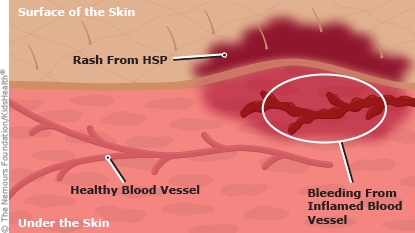
IgA vasculitis (also called Henoch-Schönlein purpura or HSP) is a condition that causes inflammation (swelling) of the small blood vessels. Blood leaks out of the inflamed blood vessels into the skin, joints, intestines (bowels), and kidneys.
IgA vasculitis often follows an infection with a virus or bacteria (types of germs). It usually goes away on its own within 4–6 weeks, and most children don't have any medical problems that continue. It is not contagious (passed from person-to-person).

Follow your healthcare provider's instructions for:
- Giving your child any prescription medicines
- Whether you need to check your child's pee and blood pressure at home (to make sure the kidneys are working properly)
- Taking your child to any specialists such as a nephrologist (kidney doctor)
- When to follow up (Your child will need to come back often in the first year for checkups so your healthcare provider can make sure there aren't any new or continuing problems.)
- Any sports or activities your child should avoid and when they can return to school, sports, and other activities
For pain:
- Give your child ibuprofen (Advil®, Motrin®, or a store brand), naproxen (Aleve®, Naprosyn®, or a store brand), or acetaminophen (Tylenol® or a store brand) as directed by your healthcare provider. Follow the directions on the label for how much to give and how often.
- Don't give aspirin to your child. It can cause a rare but serious illness called Reye syndrome.
- Apply cool compresses (cold cloths) a few times a day to painful, swollen joints.
- Raise your child's arms or legs up on a pillow when your child is sitting or lying down to help with any swelling and discomfort.
- It may also help to:
- Do something together that your child enjoys, such as reading a book or watching a show, to help get their mind off the pain.
- Play relaxing music.
Other helpful information:
- Encourage your child to rest when tired, but complete bed rest is not necessary.
- Offer small, frequent meals of bland, easy-to-digest foods if your child has stomach pain.
- Encourage your child to drink plenty of liquids.

Your child:
- Has new or worsening joint pain or swelling, belly pain, or a rash
- Has swelling of the scrotum (the pouch of skin below the penis that holds the testicles), since this can be a sign of vasculitis in the testicles or scrotum
- Has pink- or tea-colored pee
- Is not peeing as much as usual
- Seems to feel worse
- Is eating or drinking very little
If you are checking your child's pee or blood pressure, follow your healthcare provider's instructions about what blood pressure and pee results you should call to report.

Your child:
- Isn't drinking at all or has signs of dehydration (not enough water in the body) including a dry or sticky mouth, sunken eyes, less pee or darker pee than usual, little or no tears when crying, or unusual sleepiness
- Has severe belly or scrotal pain
- Has blood in their poop
- Develops chest pain or trouble breathing
- Seems confused, has trouble walking, or starts behaving in an unusual way
- Has a seizure (uncontrolled jerking movements)
You know your child best. If they have symptoms that worry you or seem very sick, call your healthcare provider or take your child to the ER.

What causes IgA vasculitis? Experts don't know for sure what causes HSP, but it's often triggered by an infection. Other possible causes include medicines and food allergies. Some people might have a genetic (inherited) risk for the condition.
When does IgA vasculitis occur? It happens when IgA (a protein made by your immune system to fight infections) clumps together with other proteins and gets stuck in the walls of small blood vessels. This triggers the inflammation of the small blood vessels in the skin, joints, intestines, and kidneys.
What happens if IgA vasculitis affects the kidneys? Most kidney problems from IgA vasculitis in kids are mild and get better on their own, but sometimes there are ongoing medical issues. It's important to check your child's pee and blood pressure as directed and take your child to every follow-up appointment. This way, if there is a kidney problem, it will be caught and treated early.
Can IgA vasculitis come back? Yes, it can. If it does come back, it is usually within the first few months and is less severe.