
Your child had diabetic ketoacidosis (DKA) and was treated in the hospital. They are now stable and ready to continue treatment at home.
Your diabetes care team will support you and your child as you learn how to manage your child's diabetes and prevent DKA. Management includes checking your child's blood glucose levels (also called blood sugar levels) and giving insulin to keep blood glucose levels steady.
Here's how to care for your child.
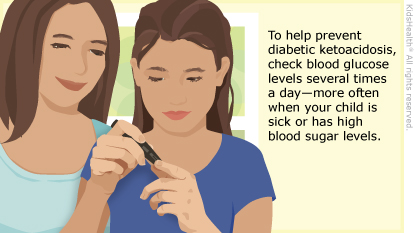

Follow your diabetes care team's instructions for:
Stay nearby when your child checks their blood sugar or takes insulin to make sure they're doing it right. This will also help them build good habits.

Your child:

Your child:

What is diabetes? Diabetes happens when the pancreas (an organ in the belly) no longer makes insulin. Insulin is a hormone that helps move glucose (sugar) from the blood into the cells, where it is used for energy.
What happens in DKA? In DKA, someone with diabetes has a high blood glucose level (hyperglycemia) for a while. Since they don't have insulin to move the glucose into the cells, it stays in the blood and the body can't use it for energy. The body starts using fat for energy instead of glucose. This creates chemicals called ketones (KEE-tones). Ketones make the blood too acidic. This can cause serious damage to organs and even death. DKA is a medical emergency.
What causes DKA? DKA can happen if someone with diabetes:
Sometimes someone who doesn't know they have diabetes goes without insulin for a while and goes into DKA. When they go to their healthcare provider or the hospital, testing shows that they have diabetes.
What are the symptoms of DKA? At first someone with DKA may:
The symptoms don't always happen all at once. They usually happen over several hours. More serious symptoms include:

