Urinary Tract Infection: How to Care for Your Child

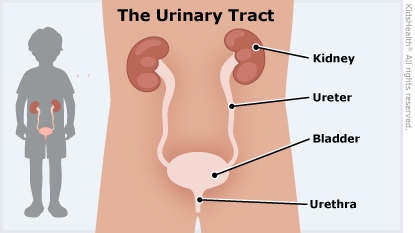
A urinary tract infection (UTI) happens when bacteria (germs) get into the bladder or kidneys. The bladder is where pee is stored before it leaves the body through the urethra. The kidneys are two small organs that clean the blood and help the body get rid of waste through pee.

Kids with a UTI may have fever, pain when peeing, bad-smelling pee, need to pee more often, pee accidents, or belly or back pain.

UTIs are treated with antibiotics, which kill the germs. Most children start to feel better within a couple of days, but it is very important to finish all the medicine so the infection goes away completely.

With the right treatment, most children recover quickly and do not have long-term problems.
Care Instructions

  • Give your child plenty of liquids to drink. Avoid drinks with caffeine, as they can irritate the bladder.
  • Give your child the medicines that your healthcare provider prescribed.
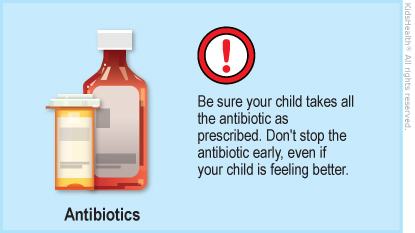
  • Your child should start to feel better in about two days, but keep giving the medicine until it is finished. This is the best way to kill the germs that caused the UTI.

Illustration of medicine/antibiotics with English instructions

  • If your child is uncomfortable from fever, and your healthcare provider says it's OK, you can give acetaminophen (Tylenol® or a store brand). Follow the directions on the label for how much to give and how often.
  • Check with your healthcare provider before giving your child ibuprofen (Advil®, Motrin®, or a store brand).
  • Don't give aspirin to your child. It can cause a rare but serious illness called Reye syndrome.
  • Let your child rest as needed.
  • Encourage your child to pee as soon as they feel the urge. They shouldn’t hold in the pee.
  • Follow up with your healthcare provider for any recommended tests or visits.

Your child:

  • Has new or worsening symptoms such as vomiting, chills or shivering, or belly, side, or back pain
  • Is over 3 months old and has a fever. If your baby is 3 months or younger and has a rectal (taken in the bottom) temperature of 100.4°F (38°C) or higher, take them to the ER.
  • Isn't able to take the antibiotic
  • Doesn’t seem better after two days on antibiotics
  • Gets better, then has signs of a UTI again

You know your child best. If they have symptoms that worry you or seem very sick, call your healthcare provider or take your child to the ER.

Go to the ER if...

Your child isn't drinking at all or has signs of dehydration (not enough water in the body) such as a dry or sticky mouth, sunken eyes, less pee or darker pee than usual, little or no tears when crying, or unusual sleepiness.

More to Know

What are the symptoms of UTIs? UTIs can show up differently depending on a child's age. A baby may have a fever, throw up, or be fussy. Older kids may have a fever, pain when peeing, lower belly pain, or an urge to pee often. Kids who are already toilet trained may have pee accidents when they have a UTI.

Why do some kids get UTIs? Anyone can get a UTI but it is more common in:

  • Females, because they have a shorter urethra and germs can enter the urethra/bladder more easily
  • Kids who have other family members that get UTIs
  • Children with problems in how the kidney, bladder, or urethra are formed, but this is rare

How can we help prevent UTIs? These steps can help prevent new infections:

  • In females, bacteria in poop can move up the urethra into the bladder and cause infection. So teach your child to always wipe from front to back.
  • Pay attention to how often your child pees and poops. Holding in pee or being constipated (having few or hard-to-pass poops) can make a UTI more likely.
  • Avoid bubble baths and perfumed products that can irritate the urethra. This can let germs grow in the bladder and lead to a UTI.
Learn More