Tics are short, sudden, repeated movements or sounds that are hard to control. Examples of tics include shrugging, sniffling, blinking, or throat clearing. The type of tics a person has may change over time. How often tics happen also may change. Tics often come and go and can get worse when a person is stressed or anxious.
Most tics don't last more than a few months at a time. There are ways you can help your child manage their tics.

Follow your healthcare provider's recommendations for:
- If your child needs any medicines
- If your child needs to see any specialists, such as a behavioral health counselor or a psychiatrist (a doctor who specializes in conditions that affect emotions and behavior)
- When to follow up
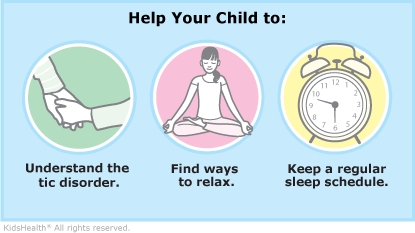
Follow these tips to help your child cope with their tics:
- Avoid commenting on, pointing out, or asking your child to stop the tics. Unwanted attention can make tics worse.
- Offer support and answer any questions that your child has about tics, so they know what's going on.
- Make sure your child gets plenty of sleep. Being tired can lead to more tics.
- Help your child manage stress. Stress can also lead to more tics. Encourage them to:
- Try meditation or yoga.
- Get physical activity every day.
- Eat healthy foods.
- Talk to a counselor.
- Be aware that too much screen time may increase stress.
- Balance school and work activities with enough time to relax/recharge.
- Keeping the tics under control is hard for kids. When they get home from school or other activities, it's OK for them to relax and "let out" their tics (this will look different for each child).
- Make sure teachers and friends understand that your child is not doing the tics on purpose or for attention. Ask them to be patient with your child and treat them like any other kid.
- Remind your child that tics are just a small part of who they are. Help them focus on other positive parts of themselves, such as being a good learner, participating in sports or other activities, and being a loyal friend. Sometimes focusing less on their tics will help your child have fewer of them.

What causes tics? The exact cause of tics isn't known. They can run in families. Tics may be more noticeable when kids are stressed, anxious, or tired. They may be less frequent when kids are relaxed.
Can a person control tics? Someone with a tic disorder has little or no control over their tics. Sometimes a person can briefly hold off a tic with a lot of effort. When this happens, they may then have to "let out" tics that they were holding back.
What is the treatment for tics? Most tics stop after a few months without treatment, though some may last more than a year. If the tics go on for more than a year, are very severe or cause pain, or make everyday activities like school and being with others difficult, healthcare providers may suggest working with a behavioral health counselor. Less often, they will prescribe medicine.