
After someone has chickenpox, the virus that causes it (varicella-zoster) stays in their body. Years later, the virus can become active again and cause a painful skin rash called shingles. In most kids, shingles is treated with pain control and rest. Some kids may need antiviral medicines. Until the rash’s blisters scab over (usually in about 7–10 days), someone can spread chickenpox (but not shingles) to people who have not had chickenpox or the varicella vaccine. Follow these instructions to care for your child and help prevent the virus from spreading to others.
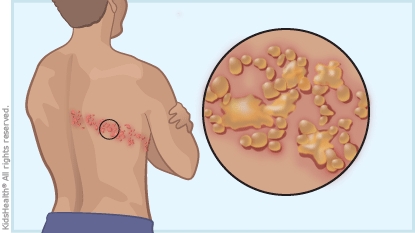


Your child has:

Your child has changes in their vision or hearing, weakness on one side of the face, or seems very sick or confused.

What are the symptoms of shingles? Besides the painful rash, kids with shingles may also have a headache, fever, achiness, and feel tired.
Can shingles be prevented? It's not always possible to prevent shingles. But the chickenpox vaccine makes it less likely that someone will get shingles. If you or a family member (over 1 year old) has never had chickenpox or the vaccine, talk to your healthcare provider about getting vaccinated. A shingles vaccine is available for people over 50 years old.
What problems can happen? Most kids recover fully from shingles and do not develop any other problems. Very rarely, shingles can lead to a skin infection, vision problems, ongoing pain, or nerve and brain problems.

