Encopresis: How to Care for Your Child

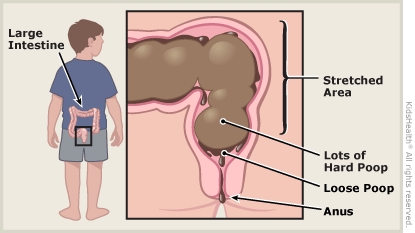
When a child who knows how to use the toilet has liquid poop leak into their underwear, it's called encopresis (en-koh-PREE-sis). The condition happens to kids who have constipation (fewer poops or dry, hard, or difficult-to-pass poops). The liquid poop leaks around the hard poop that has built up in the bowels (intestines).

Kids with encopresis aren't doing it on purpose and sometimes don't even know it happened.

Treating your child's constipation will help the encopresis get better. Treatment begins by “cleaning out” the bowels with medicine. Afterward, you need to continue treatment to make sure that your child's poops stay soft so they can poop about once a day (or every other day). It may take several months or longer for your child's poops to go back to normal and for encopresis to stop.

Care Instructions

  • Give the prescribed medicines for the cleanout (sometimes called a disimpaction) as directed by your healthcare provider. This may include one or more of the following:
    • Laxative, a medicine taken by mouth, such as polyethylene glycol (MiraLAX®) that draws water from the belly into the bowels and helps “push” out the poop
    • Stool softeners, medicine taken by mouth to soften the poop
    • Enema, liquid medicine put into the rectum (lower part of the bowels) to soften the poop.
  • After the cleanout, it's important to continue treatment to prevent further constipation and ensure that the bowels can return to working normally:
    • Give your child the laxative and stool softeners for as long as directed by your healthcare provider. Your child might need to take the medicines for months to keep the poop soft and prevent the constipation from coming back. After the bowels are working normally, your child can slowly stop taking the medicines, over a few weeks or months.
    • Help your child add fiber to their diet. High-fiber foods include bran cereal, pears, strawberries, beans (such as pinto, kidney, black, or lima), and sweet potatoes.
    • Avoid giving your child foods that can worsen constipation, such as fatty, sugary, or starchy foods or dairy products.
    • Encourage your child to drink plenty of water. Have them keep a water bottle with them so they can sip on it throughout the day.
    • Drinking 100% fruit juice (like prune, pear, or apple) may help too. Check with your healthcare provider on how much juice is OK for your child. Too much juice can make it hard for your child to get the nutrition they need, lead to too much weight gain, and cause tooth decay.
    • Make any other diet changes your healthcare provider recommended.
    • Encourage your child to sit on the toilet for 5–10 minutes once or twice a day. (If needed, offer a small reward like a sticker. You can also make a sticker chart and put it up in a place where they can see it and feel proud of their progress.) Sitting on the toilet after a meal can take advantage of the natural reflex (feeling) the body has to poop. Going regularly helps your child get back the feeling and control of pooping normally.
    • While using the toilet, have your child prop up their feet about 6–9 inches on a stool so their knees are higher than their hips. This can make it easier to poop.
  • Other important information:
    • Encourage your child to be physically active every day since this can help with constipation and has lots of other health benefits too.
    • Help your child manage stress since it can make constipation worse. Getting enough sleep, breathing exercises, not spending too much time on screens (phones, computers, and tablets), eating healthy foods, being physically active, and talking to a counselor can all help.
    • Never punish your child for accidents. They are not doing this on purpose.
    • Respond to accidents calmly and matter of factly. Help your child change and move on without talking too much about the accident.
    • Talk to your healthcare provider before giving your child any supplements or herbs.
    • If your child tries to hold in poop, teach them that it's important to go to the toilet as soon as they feel the need. This way, poop won't build up in the bowels.
    • If your child is uncomfortable using the bathroom at school because there are a lot of people around, work with the school nurse to find a bathroom that's more private.

Your child:

  • Continues to have hard poops or doesn't poop within two days after making the recommended changes
  • Doesn't show at least some improvement in encopresis over the next few weeks
  • Has new or worsening belly pain 
  • Begins vomiting or won't eat
  • Has a small amount of blood on the toilet paper, in the toilet, or on their poop
  • Gets better, then gets constipated again

Go to the ER if...

Your child:

  • Develops severe belly pain or a hard, swollen belly
  • Has a lot of blood on the toilet paper, in the toilet, or on their poop
  • Is vomiting again and again

More to Know

How does encopresis happen? When a child is constipated, the poop stays inside the body too long and becomes hard and dry. When constipation goes on for a while, the rectum stretches out. This makes it difficult for the muscles and nerves of the bowel to work normally and tell a child that it's time to poop. Soft, watery stool then leaks around the hard poop and comes out in the underwear — often without the child even feeling it happening.

Why does treatment for constipation/encopresis take so long? Constipation stretches out the bowels. It takes time (several months to a year) for the bowels to heal, go back to their normal size, and start working normally again.

What does it mean if my child has blood in the poop? Streaks or small amounts of blood in the poop usually aren't a sign of something serious. This happens when hard poop stretches and tears the skin around the anus (the hole where the poop comes out). These small tears are called anal fissures. If your child continues to have blood in the poop even after constipation improves, or there is more blood than usual, call your healthcare provider.

Learn More
