
Kids with hand, foot, and mouth disease have a virus that causes painful blisters and fever. The blisters may be in the mouth, on the hands and feet, and sometimes on other areas of the skin.
Blisters in the mouth make it hard for kids to eat and drink, so it's important to give medicine for pain and plenty of liquids to prevent dehydration (not enough water in the body). Most children recover fully within 7–10 days.
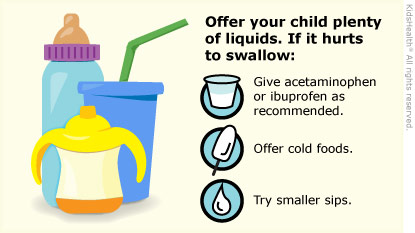


Your child:

Your child:
You know your child best. If they have symptoms that worry you or seem very sick, call your healthcare provider or take your child to the ER.

What other symptoms can kids with hand, foot, and mouth disease have? Along with blisters in the mouth and on the skin, they may also have:
How does hand, foot, and mouth disease spread? The virus that causes hand, foot, and mouth disease (coxsackievirus) can easily spread from one person to another, through mucus, saliva (spit), fluid from the blisters, or poop. It is most likely to spread during the first week of the illness but can continue to spread for a few weeks after the blisters go away (usually through poop).
How can someone avoid spreading the infection? To help reduce the spread of germs, family members and childcare providers should:
Will antibiotics help? No, antibiotics won't help. Hand, foot, and mouth disease is caused by a virus, and antibiotics don't work against viruses. Antibiotics work against bacteria (a different type of germ).
Can my child get it again? Yes. It's possible for kids to get hand, foot, and mouth disease more than once. It's most common in kids under 5 years, but it can happen in older kids and adults too.

