Gastroenteritis: How to Care for Your Child

Gastroenteritis (also called the "stomach flu") is an infection that causes vomiting (throwing up) and diarrhea (loose or watery poop). Many children also have a fever.

Kids who have gastroenteritis lose a lot of fluid in their poop or vomit. This can lead to dehydration (not having enough water in the body). Keep your child hydrated by offering plenty of fluids, including an oral electrolyte solution (such as Pedialyte®, Enfalyte®, or a store brand) as recommended by your healthcare provider. You can buy the oral electrolyte solution at drugstores or supermarkets without a prescription.

Here's how to care for your child.
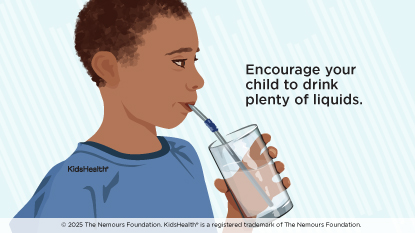
Boy drinking from glass. Caption says

Care Instructions

Giving Liquids

  • Give your child small amounts of the oral electrolyte solution every 5 minutes. Try having them sip from a cup or a straw. Or you can use an oral syringe, a medicine cup, or a kitchen teaspoon.
    • Start with 1–2 teaspoons (5–10 mL) at a time.
    • After 1 hour, if your child is doing well, give 3–4 teaspoons (15–20 mL) at a time.
    • Continue to give this amount every 5 minutes for the next hour or two until your child is peeing as usual.
    • If your child vomits again, start over with 1–2 teaspoons (5–10 mL) of oral electrolyte solution every 5–10 minutes.
  • You also can give frozen electrolyte pops (brand names include Pedialyte®; many stores have a store brand), shaved ice, and flavored gelatin.
  • If your child hasn't vomited for a few hours, continue to add other liquids, such as broth, diluted fruit juices, and water. You can also give milk unless it makes the vomiting worse.
  • Don't give your child sports drinks or full-strength fruit juices (which have a lot of sugar). You may add a splash of clear fruit juice (such as apple or white grape juice) to electrolyte solutions or water for flavor.

Starting Food

  • Make any changes to your child's diet that your healthcare provider recommends.
  • If your child hasn't vomited in 8 hours, offer small amounts of plain foods, such as toast, crackers, rice, or mashed potatoes. Yogurt, fruits, vegetables, and plain cooked chicken are also OK.
  • After your child has gone 24 hours without vomiting, you can go back to offering a regular healthy diet.

Medicines

  • Don't give your child medicines for nausea, diarrhea, or vomiting, unless your healthcare provider prescribes them.
  • If your child has a fever and your healthcare provider says it's OK, you can give acetaminophen (Tylenol® or a store brand) or ibuprofen (Advil®, Motrin®, or a store brand).
  • Don't give aspirin to your child or teen. It can cause a rare but serious illness called Reye syndrome.

Your child:

  • Continues to vomit or have diarrhea for more than 24 hours
  • Has been on the oral electrolyte solution for 24 hours and is still not taking other liquids
  • Is still not eating solid foods 3–4 days after the visit
  • Gets new or worsening symptoms, such as fever or belly pain
  • Has blood or mucus in their poop

Go to the ER if...

Your child:

  • Isn't drinking at all or has signs of dehydration, such as a dry or sticky mouth, sunken eyes, less pee or darker pee than usual, little or no tears when crying, or unusual sleepiness
  • Is vomiting repeatedly or has vomit that's bright green, red, or brown
  • Has severe belly pain, or a swollen or hard belly

You know your child best. If your child has symptoms that worry you or seems very sick, call your healthcare provider or take your child to the ER.

More to Know

What causes gastroenteritis? Gastroenteritis happens when a germ (virus, bacterium, or parasite) infects the stomach or intestines. Viruses are the most common cause of gastroenteritis in kids.

How do oral electrolyte solutions help keep a child hydrated? These solutions contain a balanced mix of water, electrolytes (sodium, chloride, and potassium), and sugars (glucose). They replace the liquids and electrolytes that a child loses through diarrhea or vomiting. The solutions help prevent or treat dehydration and keep the body's electrolytes balanced.

Does my child need an antibiotic? Since viruses are the usual cause of gastroenteritis in kids, an antibiotic won't help your child. Antibiotics treat infections caused by bacteria, not viruses.

How can we prevent gastroenteritis from spreading? To help prevent the spread of gastroenteritis:

  • Teach all family members to wash their hands well and often. They should wash for at least 20 seconds with soap and water. This is especially important after using the bathroom and before preparing or eating food.
  • Clean tabletops, doorknobs, and other hard surfaces with a cleaner that kills viruses.
  • Keep your child out of school or childcare until 24 hours have passed with no vomiting, diarrhea, or fever. Also keep your child out of swimming pools until all symptoms have stopped.
Learn More
