Dyslipidemia: How to Care for Your Child

Dyslipidemia (dis-lip-ih-DEE-mee-uh) means the levels of fats in your child's blood — cholesterol and triglycerides — are out of balance. It can include any combination of these:

  • High total cholesterol
  • High low-density lipoprotein (LDL, or “bad”) cholesterol
  • High triglycerides
  • Low high-density lipoprotein (HDL, or “good”) cholesterol

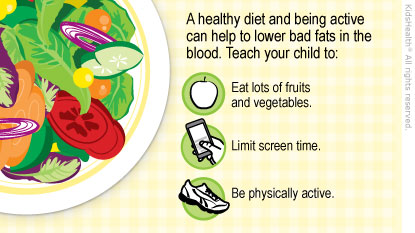
Your child was diagnosed with dyslipidemia. Over time, dyslipidemia can lead to heart problems and other medical issues. A healthy diet, regular physical activity, and medicine (if needed) can get the fats in better balance.

Care Instructions

Diet

Encourage your child to eat more of these:

  • Fruits and vegetables — aim for five servings total a day
  • Whole grains — oats, brown rice, whole-wheat bread, quinoa, and popcorn
  • Beans, lentils, and peas
  • Healthy fats — olive oil, avocados, nuts (almonds, walnuts), seeds (chia, flax), and nut butters without added sugar
  • Fatty fish — salmon, mackerel, sardines, and trout provide omega-3 fats that boost HDL and lower triglycerides. Aim to serve fish twice a week.
  • Lean protein — skinless chicken, turkey, eggs, tofu, and low-fat dairy products, such as Greek yogurt and cottage cheese

Encourage your child to eat less of these:

  • Saturated fats — found in fatty meats, bacon, sausage, full-fat cheese, butter, and cream. (These raise LDL the most.)
  • Trans fats — partially hydrogenated oils found in some fried foods, baked goods, and packaged snacks
  • Sugary drinks and sweets — soda, energy drinks, sweet tea, sports drinks, candy, and pastries (which spike triglycerides and can lower HDL)
  • Refined carbs — white bread, white rice, and highly processed snack foods (Swap out for whole-grain versions.)
  • Fast food and ultra-processed snacks — often loaded with saturated fat, sodium, and hidden sugars

Physical Activity

Being physically active helps keep kids at a healthy weight and balance out their cholesterol levels. Help your child find activities they enjoy and be active together as much as possible.

  • Aim for at least 60 minutes of moderate-to-vigorous activity most days of the week. It doesn't have to be all at once — three 20-minute blocks work too.
  • Include muscle-strengthening activities (such as push-ups, squats, or resistance bands) at least three days a week.
  • Include bone-strengthening activities (running, jumping, dancing, tennis) at least three days a week.

Other Important Tips

  • Your child should take any medicines as prescribed.
  • Follow any weight-loss programs that your healthcare provider recommends.
  • Help your child learn to read food ingredient labels so they can make healthy choices.
  • Other healthy habits can help with dyslipidemia:
    • Encourage your child to get plenty of sleep. Kids 6–12 years old need about 9–12 hours of sleep each night, and teens need 8–10 hours each night.
    • Your child should not smoke, vape, or drink alcohol.
    • Help your child find ways to lower stress, such as breathing exercises, listening to music, journaling, or talking to a counselor.

  • You have any questions about dyslipidemia.
  • Your child is having trouble following the healthcare provider's recommendations.

More to Know

What causes dyslipidemia? Eating a diet high in fats, particularly saturated fat and trans fats, and being overweight can lead to high cholesterol. Smoking and drinking alcohol can also contribute to dyslipidemia. Dyslipidemia also runs in some families. In some kids, certain medical problems (such as hypothyroidism, diabetes, or kidney or liver disease) can cause dyslipidemia.

Why is dyslipidemia a problem? Dyslipidemia damages blood vessels and over time can cause serious heart problems and other medical issues. Correcting the balance of fats now can help prevent these problems in the future.

What is cholesterol and how does the body use it? Cholesterol is a waxy, fat-like substance in the blood. It helps build cell membranes and is used to make hormones (chemical messengers), such as estrogen and testosterone, and vitamin D. Cholesterol in the blood doesn't move through the body on its own. It combines with proteins to travel through the bloodstream. Cholesterol and protein traveling together are called lipoproteins (low-density lipoprotein cholesterol and high-density lipoprotein cholesterol).

Where does cholesterol come from? The liver makes all the cholesterol that the body needs. But cholesterol also comes from some of the foods we eat.

These foods from animals contain cholesterol:

  • Egg yolks
  • Meat
  • Poultry
  • Seafood
  • Dairy products (including milk, cheese, and ice cream)

Foods from plants — such as vegetables, fruits, and grains — don't have any cholesterol.

What are triglycerides? Triglycerides are a type of fat found in your blood. When you eat, your body converts any energy it doesn't need to use right away into triglycerides, which are then stored in your fat cells for later use.

Learn More
