Sinus Infection: How to Care for Your Child

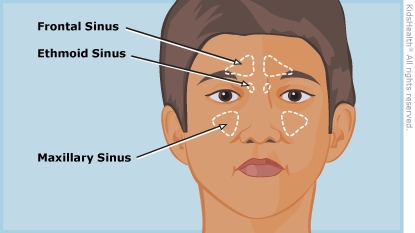
Sinuses are hollow spaces in the cheekbones, in the forehead, and behind the nose. A sinus infection (also called sinusitis) is an infection in one or more of the sinuses. Kids with a sinus infection may have a cough, a runny nose, a fever, a sore throat, bad breath, a headache, and nausea or vomiting. Germs (such as bacteria or a virus) usually cause the infection.

Treatment for a sinus infection usually includes a combination of medicines taken by mouth, like antibiotics and allergy medicines, and medicines that are sprayed into the nose, such as saline (saltwater), steroids, and decongestants.

Here's how to care for your child.
Care Instructions

  • Follow your healthcare provider's instructions for: 
    • Giving antibiotics if they were prescribed. Be sure to give your child all of the doses as directed, even if they are feeling better.
    • Using any nasal sprays.
  • If your child is using more than one nasal spray, use them in the order that your healthcare provider recommends.
  • Your child should not use the nasal decongestant more often than recommended or for more than three days. Using it too much or too long could make your child's stuffiness worse. 
  • If your child is uncomfortable from pain or fever, and your healthcare provider says it's OK, you can give acetaminophen (Tylenol® or a store brand) or ibuprofen (Advil®, Motrin®, or a store brand). Follow the package directions for how much to give and how often. Don't give ibuprofen to babies under 6 months old. 
  • Don't give your child aspirin. It can cause Reye syndrome, a rare but serious illness. 
  • Don't give cough or cold medicines to children under 6 years old. These medicines can cause serious side effects. Check with your healthcare provider before giving cough or cold medicines to children 6 years and older.
  • Offer your child plenty of liquids to drink.
  • Let your child rest as needed.
  • To help your child feel more comfortable while sleeping, try:
    • A cool-mist room humidifier (clean the humidifier as directed)
    • Having your child sleep on two pillows instead of one
  • People who are exposed to cigarette smoke are more likely to get sinus infections. Make your home and car smoke-free. Visit smokefree.gov or call 800-QUIT-NOW for help. 

Your child:

  • Has a fever of 100.4°F (38°C) that lasts more than 3 days, or if the fever goes to 102°F (38.9°C) or higher
  • Isn't improving after 3 days
  • Has vomiting that is not getting better after a day
  • Has new or worsening symptoms

Go to the ER if...

Your child has:

  • Changes in vision or pain with eye movements
  • Neck pain and/or stiffness or a severe headache
  • Bulging eyes or severe swelling around the eyes
  • Swelling of their forehead
  • Trouble thinking clearly or seems confused

You know your child best. If they have symptoms that worry you or seem very sick, call your healthcare provider or take your child to the ER.

More to Know

How does someone get a sinus infection? Most people who get a sinus infection had a cold or allergy symptoms first. When your child has a cold or allergies, nasal passages and sinuses become swollen and make more mucus than usual. A sinus infection happens when mucus gets infected with germs, such as bacteria or viruses.

Do kids with a sinus infection always need antibiotics? Some sinus infections get better on their own. Depending on symptoms and how long someone has been sick, healthcare providers may not prescribe antibiotics right away.

How do nasal sprays help with sinusitis? Nasal sprays work in different ways to relieve stuffiness inside the nose. Saline sprays clean and soothe inside the nose and thin the mucus, steroid nasal sprays ease inflammation (swelling), and decongestant nasal sprays tighten the blood vessels. Nasal sprays can also ease swelling at the entrance to sinuses to help the sinuses drain. 

Can sinus infections be prevented? Not all sinus infections can be prevented. But some can be avoided by treating allergies and trying not to catch a cold. Have your child wash their hands well and often with soap and water and scrub for at least 20 seconds, avoid sick people when possible, and not share drinking glasses or eating utensils with other people.

Learn More
