
Pneumonia (nuh-MOH-nyuh) is an infection in the airways of the lungs. It's caused by different types of germs, such as bacteria or viruses. Your child's pneumonia was caused by bacteria. Common symptoms include fever, cough, fast or hard breathing, and chills.
Treatment for bacterial pneumonia includes an antibiotic, rest, plenty to drink, and other care at home to help your child feel comfortable while they recover.
Most kids with bacterial pneumonia feel better in a couple of days after starting on an antibiotic. But the cough can last longer. Here's how to care for your child.


Your child:

Your child isn't drinking at all or has signs of dehydration (not enough water in the body), such as a dry or sticky mouth, sunken eyes, less pee or darker pee than usual, little or no tears when crying, or unusual sleepiness.
Go to the ER or Call 911 if …
You know your child best. If they have symptoms that worry you or seem very sick, call your healthcare provider or 911 or take your child to the ER.

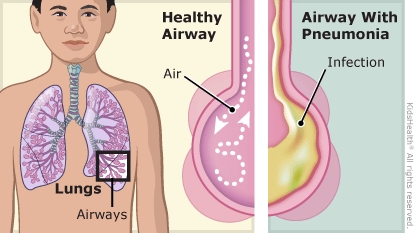
What happens in bacterial pneumonia? If bacteria get into the lungs, the airways swell and get irritated. They also fill with white blood cells (germ-fighting cells) and mucus. These block the airways and lead to coughing and sometimes breathing problems.
What are the symptoms of pneumonia? Kids with pneumonia usually have a cough. They might also have a fever and chest pain and may not want to eat as much as usual. If the pneumonia is severe, they may also have trouble breathing.
How does bacterial pneumonia spread? The germs that cause pneumonia can spread through coughing and sneezing, when someone touches the germ, then touches their mouth, nose, or eyes, or by sharing a drinking glass or eating utensil.
How can we prevent the spread of germs that cause pneumonia and other illnesses? It helps to have all family members:
When can my child return to school, sports, and other activities? Most kids with bacterial pneumonia can go back once they:

