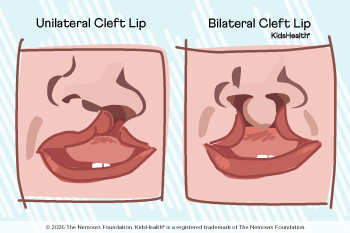
Babies with a cleft lip are born with a gap or opening in the upper lip. It can happen on just one side (unilateral) or both sides (bilateral).
Your baby had surgery to repair a cleft lip. This will help your baby eat more easily and speak more clearly as they grow. They had general anesthesia to let them sleep through the surgery. They may be a little tired for the rest of the day.
Here's how to care for your baby at home.

Follow your surgeon's instructions for:
- Giving your baby pain medicines. These may include prescription pain medicine, acetaminophen (Tylenol® or a store brand), or ibuprofen (Advil®, Motrin®, or a store brand). Some prescription pain medicines also include acetaminophen or ibuprofen. To avoid giving too much, give the medicines exactly as your surgeon recommends.
- Any special instructions about how to feed your baby (Most babies can go back to their usual food and way of feeding right away.)
- When you can give your baby a bath
- Cleaning the surgery area
- Any special care of the stitches and whether they will dissolve on their own or if you need to bring your baby back to have them removed
Protect the surgery area:
- If your baby was given arm splints (called “no-no's”) to prevent them from touching the surgery area:
- Follow any special directions from the surgeon for when your baby needs to wear them. Usually, babies need to keep them on at all times, even during sleep.
- To prevent skin irritation, put the arm splints on over long sleeves.
- Check your baby's skin under the arm splints a few times a day for redness or irritation.
- Keep the arm splints clean and dry.
- Keep using the arm splints for as long as your surgeon recommends.
- Don't put any hard toys in your baby's mouth and don't use a toothbrush to brush your baby's teeth. If needed, you can clean the front teeth with a piece of gauze dipped in water.
- Hold your baby facing out so they don't bump the surgery area on your shoulder or on something else.
- Avoid bouncing, rough play, or any other situations where your baby might bump their face.
Important tips:
- If you feel like your baby isn't feeding normally because of soreness from the surgery, give the pain medicine about an hour before feedings.
- It's expected that your baby will be a little fussy for the first few days after surgery. Gentle rocking, soft music, skin-to-skin contact, and a quiet environment will all help your baby feel comforted.
- Don't pick at the stitches or surgery area.
- Do not apply any ointment or creams to the surgery area unless the surgeon recommends it.
- Be sure your baby is drinking plenty of liquids. You will know they are getting enough liquids if:
- They have a wet diaper or pee at least every 4–6 hours.
- Their mouth is moist.
- They have tears when they cry.
- They appear satisfied after feeding and are swallowing when they feed.
- Rinse your baby's mouth with water after every feeding.

Will my baby have a scar from the surgery? Yes, when the surgery area heals, there will be a small scar on the lip under the nose. The scar will get better with time. Protecting the area from the sun with shade and sunscreen will help the scar fade. Ask the surgeon about any other ways (such as ointments or massage) that can be helpful once the surgery area has healed.
What kinds of problems can kids with cleft lip have after surgery? Most babies do well after cleft lip surgery, but some may have problems with their teeth, trouble speaking clearly, or have more ear infections than other kids. Some kids may need another lip or nose surgery as they grow. If needed, there are specialists to help your child with these problems.