Viral Pneumonia: How to Care for Your Child

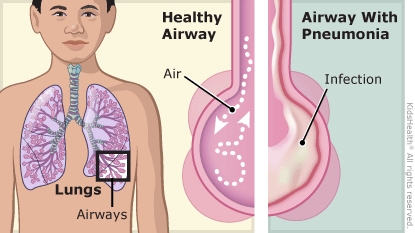
Pneumonia is an infection in the airways of the lungs. It's caused by germs, such as viruses or bacteria. Your child's pneumonia was caused by a virus. Common symptoms include fever, cough, fast or hard breathing, and chills.

Treatment for viral pneumonia usually includes rest, plenty to drink, and other care at home to help your child feel comfortable while they recover. For some viruses, such as influenza (flu), a healthcare provider may prescribe antiviral medicine. However, antibiotics do not help viral pneumonia because they only treat infections caused by bacteria.

Most children start to feel better within a week but the cough can last for several weeks. Here's how to care for your child.

Care Instructions

  • Give any medicines prescribed by your healthcare provider exactly as directed.
  • If your child is uncomfortable from fever, and your healthcare provider says it's OK, you can give acetaminophen (Tylenol® or a store brand) or ibuprofen (Advil®, Motrin®, or a store brand). Follow the directions on the label for how much to give and how often. Don't give ibuprofen to babies under 6 months old.
  • Don't give aspirin to your child. It can cause a rare but serious illness called Reye syndrome.
  • Help your child get plenty of rest. They may need to take a day or two off from school, sports, and activities to let their body heal.
  • Give your child plenty of liquids. Follow your healthcare provider's instructions on what type of liquids are best for your child (for example, formula, water, herbal tea, warm broth, or electrolyte drinks).
  • To help with cough:
    • Use a cool-mist humidifier, especially while your child is sleeping. Clean the humidifier after each use.
    • If your child is older than 12 months, you may give 1–2 teaspoons of honey at bedtime to help soothe a cough. Do not give honey to infants younger than 12 months.
    • If your child is older than 6 years and is not at risk for choking, you may offer them a cough drop or a hard candy while they are awake.
  • Don't give cough or cold medicines to children under 6 years old. These medicines can cause serious side effects. Check with your healthcare provider before giving cough or cold medicines to children 6 years and older.
  • Do not allow anyone to smoke or vape around your child. Being around smoke or vapor can make coughing worse, increase the risk of lung infections, and cause other health problems. For help quitting, call 800-QUIT-NOW (800-784-8669) or visit smokefree.gov.
  • Be sure your child has had all recommended vaccines. Some can help prevent certain kinds of pneumonia.

Your child:

  • Has a new or worsening fever, chest pain, coughing, or vomiting
  • Seems to be getting worse
  • Has a cough that continues for more than a few weeks

Go to the ER if...

Your child isn't drinking at all or has signs of dehydration (not enough water in the body), such as a dry or sticky mouth, sunken eyes, less pee or darker pee than usual, little or no tears when crying, or unusual sleepiness.

Call 911 if…

  • Your child is breathing much faster than usual, has blue lips, nails, or skin, or is struggling to breathe.
  • The skin between your child's ribs, above their collarbone, or below their ribs pulls in with each breath.

You know your child best. If they have symptoms that worry you or seem very sick, call your healthcare provider or 911, or take your child to the ER.

More to Know

What happens in viral pneumonia? If a virus — such as influenza (flu), coronavirus, or respiratory syncytial virus (RSV) — gets in the lungs, the airways swell and get irritated. They also fill with white blood cells (germ-fighting cells) and mucus. These block the airways and lead to coughing and sometimes breathing problems.

What are the symptoms of pneumonia? Kids with pneumonia usually have a cough. They might also have a fever and chest pain and may not want to eat as much as usual. If the pneumonia is severe, they may also have trouble breathing.

How does viral pneumonia spread? The germs that cause pneumonia can spread through coughing and sneezing, when someone touches the germ, then touches their mouth, nose, or eyes, or by sharing a drinking glass or eating utensil.

To help prevent the spread of germs, have all family members:

  • Sneeze into a tissue, then throw the tissue away and wash their hands well. If a tissue is not available, they should sneeze into their upper sleeve or inner elbow, not their hands.
  • Wash hands well and often with soap and water and scrub for at least 20 seconds. This is especially important after coughing or sneezing, or after having a bowel movement. If soap and water are not available, they can use a hand sanitizer with at least 60% alcohol.

When can my child return to school, sports, and other activities? Most kids with viral pneumonia can go back once they:

  • Have not had a fever for at least 24 hours (without fever-reducing medicines)
  • Feel well enough to participate
Learn More