Chest Pain: How to Care for Your Child

Someone with chest pain may feel discomfort, tightness, or burning in the chest area. Sometimes, the pain can get worse when taking a deep breath, moving, or coughing.

Your child's chest pain seems to be caused by an injury or a strain on their muscles, bones, or cartilage (bendable material that cushions bones) in the chest area. The pain should get better on its own with rest and basic home care.

Here's what you can do at home to help your child feel more comfortable.
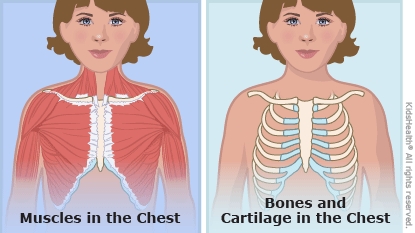
Illustration of the muscles and bones in the chest

Care Instructions

Follow your healthcare provider's instructions for:

  • Giving your child any pain medicines such as acetaminophen (Tylenol® or a store brand) or ibuprofen (Advil®, Motrin®, or a store brand). Follow the package directions for how much to give and how often.
  • Don't give aspirin to your child. It can cause a rare but serious illness called Reye syndrome.
  • Any activities your child should avoid.
  • Any exercises or stretches your child should do.
  • Any other things to try when your child has chest pain, such as:
    • Having your child take slow, deep breaths
    • Gently massaging the area
    • Putting a warm or cool washcloth on the area
  • When to follow up.

Your child:

  • Isn't feeling better in about a week
  • Has worsening chest pain
  • Has chest pain when exercising
  • Has a fast heartbeat or feels a fluttering or a pounding in their chest
  • Feels faint, dizzy, or weak
  • Has chest pain and a fever

Your child:

  • Has trouble breathing
  • Passes out

More to Know

What causes chest pain? Chest pain in kids and teens is often caused by an injury or a strain on the muscles, bones, or cartilage. It may happen after exercising very hard or carrying something heavy, such as a backpack. It can also happen after coughing a lot. Some kids may also get chest pain if they have:

  • Asthma
  • Lung infection (pneumonia)
  • Gastroesophageal reflux (when stomach acid backs up into the esophagus, also called heartburn)
  • Stress
  • Heart problem, but this is very rare in children

Sometimes, it's not clear what's causing the chest pain. However, most of the time, chest pain in kids and teens isn't serious.

How can I help my child lower their stress level? Since stress can lead to or worsen chest pain, it's important to teach your child ways to manage stress. If you think stress may be causing your child's chest pain, talk to them about possible reasons for their stress and suggest ways to help them cope, such as:

  • Meditation or yoga
  • Being physically active every day
  • Getting enough sleep
  • Eating healthy foods
  • Talking to a counselor
  • Being aware of how too much screen time may increase stress
  • Balancing school and work activities with enough time to relax/recharge
Learn More


