After Anesthesia: How to Care for Your Child Over 2 Years Old

Your child had a procedure today using general anesthesia (medicine that made them sleep). They may be sleepy or cranky, not want to eat much, have a sore throat (from the breathing tube used during anesthesia), feel sick to their stomach, or vomit (throw up) once or twice for the next 12–24 hours.

It’s important to pay extra attention to your child for the next 24 hours as they recover from the anesthesia.

Care Instructions

On the car ride home:

  • Use your child’s regular car seat as you normally would.
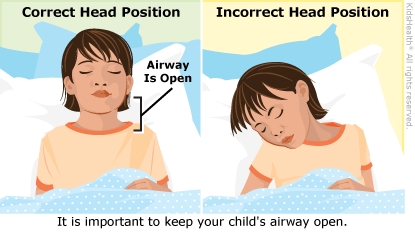
  • It’s important that your child’s head doesn’t flop forward or to the side since this can make it hard for them to breathe. Use the head support that comes with the car seat if possible or you can roll up a thin blanket and put it on either side of your child’s head.
  • Have an adult sit in the back seat with your child to watch them closely during the entire ride home. If your child’s head flops over, the adult should gently return it to an upright position. If the adult notices any gasping for breath or skin color changes in your child, you should pull over immediately, call 911, and if you know CPR, begin rescue breathing.

At Home:

  • Check on your child frequently for the rest of the day. Make sure they are breathing normally and their color looks normal. If they are sleeping, you don’t need to wake them as part of your check unless your healthcare provider told you to.
  • Your child should stay at home for the rest of the day/evening and avoid sports, running, jumping, climbing, or rough play. Have your child do quiet activities like look at books or play a board game.
  • Let your child sleep as much as they need. It's normal for them to be extra sleepy today.
  • When your child is sleeping, make sure their head is upright.
  • Have your child avoid screens (TVs, tablets, phones) for at least 2–3 hours after getting home. Viewing these devices right away can make nausea or dizziness worse.
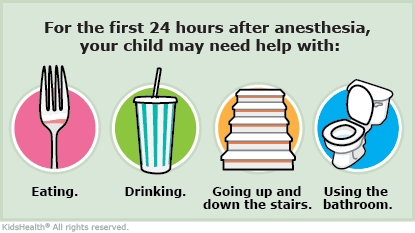
  • Your child may be a little clumsy for the rest of the day. Remove obstacles, sharp objects, or anything your child could trip over.
  • A young child might need help with walking and going to the bathroom.
  • Your teen should not drive for at least 24 hours.
  • Wait until tomorrow (or whenever your healthcare provider recommended) to let your child take a bath or shower.
  • By tomorrow, your child can return to their normal activities unless your healthcare provider tells you otherwise.

Eating and drinking:

  • Make sure your child is fully awake before offering food or drink. 
  • Start with small, frequent sips of clear liquids like water, apple juice, broth, or an oral electrolyte solution (Pedialyte® or Enfalyte® which are available at a drugstore or grocery without a prescription).
  • If your child continues to do well for about an hour on clear liquids, you can give soft, bland foods like crackers, toast, applesauce, or bananas.
  • If your child vomits once, don’t give anything to eat or drink for about an hour, then start again with clear liquids. If they vomit more than once, call your healthcare provider.
  • Avoid heavy, greasy, or spicy foods for the rest of the day.
  • Let your child eat and drink as much or as little as they want. Don't force it if they're not interested. If they are taking some liquids and peeing at least every 6–8 hours, they are getting enough.

Your child:

  • Vomits more than once
  • Has noisy breathing
  • Won’t take any liquids for more than a few hours or has signs of dehydration (not enough water in the body) such as a dry or sticky mouth, sunken eyes, less pee or darker pee than usual, little or no tears when crying, or unusual sleepiness.
  • Gets a fever
  • Is still drowsy, unsteady, or not eating and drinking normally by the next day after the anesthesia

Go to the ER if...

Your child:

  • Has trouble breathing
  • Is very sleepy and hard to wake up

You know your child best. If they have symptoms that worry you or seem very sick, call your healthcare provider or take your child to the ER.

More to Know

How does anesthesia work? Anesthesia works by blocking pain messages from getting to the brain.

Will my child remember what happened while under anesthesia? No. Anesthesia helps kids forget what happened from the time the medicine is given until it wears off. Anesthesia does not affect memories made before surgery.

Is anesthesia safe? Anesthesia is usually very safe, and most kids have no problems with it. Some studies say that general anesthesia or being sedated for a long time in children under 3 years old can lead to changes in brain development but research is ongoing.

Learn More