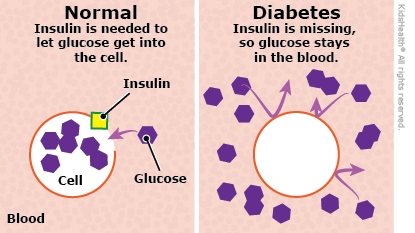
Type 1 diabetes happens when the pancreas (an organ in the belly) no longer makes insulin. Insulin is a hormone that helps move glucose (sugar) from the blood into the cells, where it is used for energy. Since a person with type 1 diabetes doesn't have enough insulin, their blood glucose levels are high (hyperglycemia).
Your diabetes care team will support you and your child as you learn how to manage your child's diabetes. Management includes checking your child's blood glucose levels (also called blood sugar levels) and giving insulin to keep blood glucose levels steady.
Following the care plan will help keep your child healthy.

Follow your diabetes care team's instructions for:
- Checking your child's blood glucose level
- Checking your child's pee for ketones (chemicals that show your child is using fat for energy since the glucose can't get into the cells)
- How much insulin to give and how to give it
- Any diet changes to make
- Whether to see a dietitian (food specialist) for meal planning help
- What to do if your child's glucose level is too high, or too low (hypoglycemia)
- When to follow up with the care team
Other important tips:
- Help your child stay active and get physical activity every day. Exercise helps their body use glucose from food. This keeps their glucose levels steady. It also helps the insulin work better.
- Teach your child about diabetes in a way they can understand. Help your child put the care plan into action every day. From calculating insulin doses and giving injections, there's a lot to learn at first. Share the responsibilities with your child.
- Living with diabetes can be hard for your child and your whole family. Talk with your child about their feelings. Listen to other family members too. If you need extra help, ask to talk with a psychologist, counselor, or social worker.
- Share this information with others who care for your child, such as the school nurse, teachers, and babysitters.

What causes type 1 diabetes? Doctors aren't sure exactly what causes type 1 diabetes. It may be related to certain genes and an immune (germ fighting ) system response that causes the body to destroy the cells in the pancreas that make insulin.
What problems can happen with type 1 diabetes? Problems that can happen include:
- High blood sugar from not having enough insulin. This can cause short-term problems like feeling very thirsty, peeing more often than usual, or feeling tired. It can also cause more long-term problems with the heart, kidneys, eyes, and nerves.
- Low blood sugar from taking too much insulin or not having enough to eat or drink. This can cause tiredness, weakness, shakiness, sweating, or nightmares.
- Slower growth.
- Diabetic ketoacidosis (DKA). In DKA, the blood glucose level is very high and ketones build up in the blood. It can cause serious life-threatening problems and needs to be treated right away.